Lamb rib rack, frenched · 3.1 lb / 1.4 kg (8 bones) · Ceramic kamado
Rack of lamb, pecan, two and a quarter hours on a kamado
A frenched eight-bone rack at 150°C on a ceramic kamado with a single pecan chunk, pulled at 58°C and rested twenty minutes. The shortest cook in the ledger and the one that changes how people think about smoked meat.
- Cook date6 Oct 2026
- Published11 Oct 2026
- Raw weight3.1 lb / 1.4 kg (8 bones)
- WoodPecan
- CookerCeramic kamado
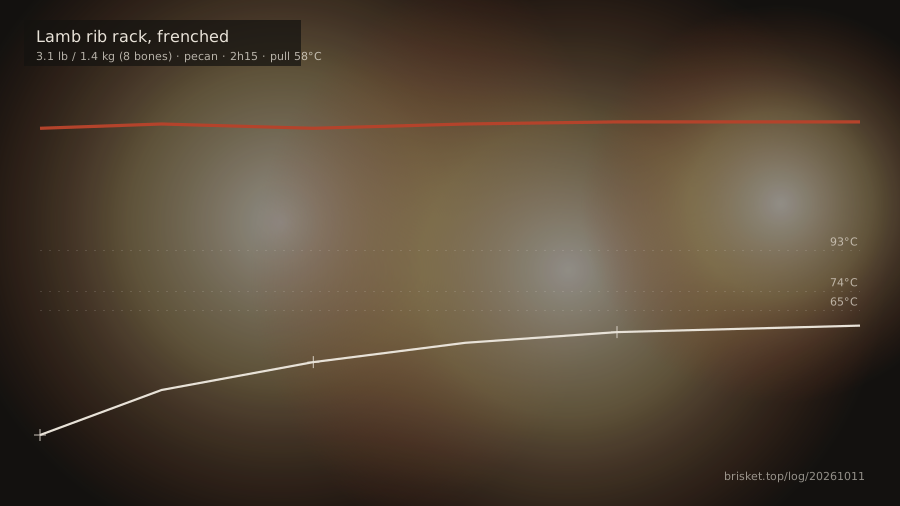
Cook timeline
- 17:00 Rack on, bone side down, over the heat deflector Kamado lit 40 minutes earlier to a stable 150°C before the meat goes anywhere near it Pit150°C Internal7°C +0m
- 17:20 Added one pecan chunk One chunk only; a kamado holds smoke in the ceramics and two would over-smoke a rack this small Pit152°C Internal28°C +20m
- 17:45 Probe check The bones conduct heat, so a probe near a bone reads high — use the eye of the rack Pit150°C Internal41°C +45m
- 18:10 Rotated 180° Kamados run hotter at the back hinge side Pit152°C Internal50°C +1h10
- 18:35 Checking every 5 minutes now From 55°C to 58°C takes about twelve minutes on a rack this size Pit153°C Internal55°C +1h35
- 19:15 Pulled, rested 20 minutes loose under foil Rest it bone up so the juices run back into the eye, not out of the fat cap Pit153°C Internal58°C +2h15
Frenched, or not
Frenching means scraping the meat and fat off the last 3 cm of each bone so it is clean and white. Butchers do it and charge for it. It takes ten minutes with a paring knife: cut the meat away from the bone in one strip, then scrape down with the back of the knife.
It is entirely cosmetic and it is worth doing, because a rack with clean bones carves into eight neat chops that people pick up by the bone. An unfrenched rack leaves a strip of fat and meat that has to be cut off at the table.
- French the last 3 cm of each bone with a paring knife
- Do not remove the fat cap on the eye — it bastes the rack
- Score the fat cap lightly in a diamond, 3 mm deep
- Salt 1.5% and rosemary, applied two hours ahead
Why a kamado and why 150°C
A kamado is a ceramic shell with very little airflow, so once it is at temperature it stays there and it uses almost no fuel. This cook burned 900 g of lump for two and a quarter hours, which is a third of what a kettle would use for the same job.
The trade is that a kamado holds smoke. With a rack this small and a cook this short, one chunk is the right amount and two would swamp it — lamb is a delicate meat and the fat cap takes smoke readily.
| Measure | This cook | Same cut on a kettle |
|---|---|---|
| Chamber | 150°C | 150°C |
| Fuel used | 900 g lump | 2.6 kg briquettes |
| Wood | 1 pecan chunk | 2 pecan chunks |
| Drift over the cook | 3°C | 18°C |
| Smoke character | Integrated, subtle | Sharper, more surface |
Pulling at 58°C and why the rest matters more
Lamb rack is best at 55°C to 58°C — pink from edge to edge with no grey band. Carryover will take it two more degrees in the first five minutes of the rest, so pull at 56°C if you want it rare and 58°C if you want it uniformly pink.
The rest is twenty minutes, bone side up, loosely covered. Bone side up matters: the fat cap is on the eye side, and resting eye-down lets the juices run out through the fat. Twenty minutes also gives the carryover time to finish, so the rack is not still climbing when you carve.
| Pull at | After 20 min rest | Centre colour | Verdict |
|---|---|---|---|
| 52°C | 54°C | Deep red | Too rare for most |
| 56°C | 58°C | Pink, no grey | Rare, ideal |
| 58°C | 60°C | Uniformly pink | Best for a table |
| 63°C | 65°C | Grey band visible | Overcooked |
Carving and serving
One bone per chop, cut from the eye side with a long knife, straight down between the bones, and do not press down. Eight bones gives eight chops and two end pieces. Three chops is a main course with sides; two is a starter.
Sauce is optional and usually unnecessary. If you want one, make it a mint and vinegar dressing rather than a cooked sauce, and put a spoonful on the plate, not on the meat — the crust on the fat cap is the whole point.
- Cut from the eye side, one bone per chop, straight down
- Do not press the knife — the rack will give if the knife is sharp
- Mint and vinegar on the plate, never poured over the crust
- Reserve the bones after carving for a lamb stock; eight bones flavour 2 litres
Cross-section notes
Lamb rack at 58°C is the pinkest meat on this ledger. The cross-section shows a thin fat cap that has rendered to about 2 mm, a dark exterior from the pecan, and a uniform pink core with no grey band. The bones are clean and white where they were frenched, which is cosmetic but it is what makes the rack look restaurant-made.
- Stall
- 0°C
- Wrap method
- No wrap (bare bark)
- Wrapped at
- never wrapped
- Pulled at
- 58°C
- Rest
- 20m
- Score
- 4.4/5
Verdict: A kamado at 150°C for two and a quarter hours is not low and slow in any meaningful sense, but a rack of lamb should never be. This is the cook to make when someone says smoked food is always heavy.
Adjacent entries
 18 Sep 2026
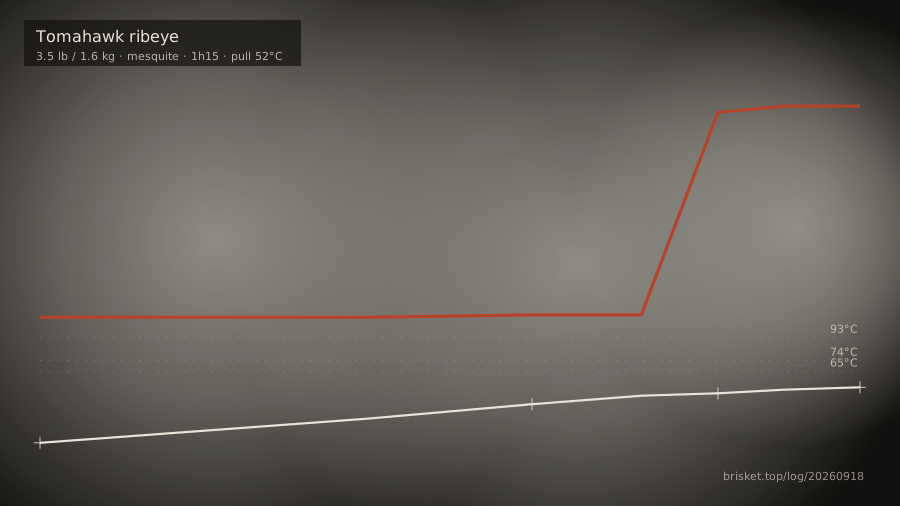
Tomahawk ribeye
Mesquite
Ceramic kamado
3.5 lb / 1.6 kg
Edge-to-edge medium rare with a 2 mm crust, no grey band4.9/5
18 Sep 2026
Tomahawk ribeye
Mesquite
Ceramic kamado
3.5 lb / 1.6 kg
Edge-to-edge medium rare with a 2 mm crust, no grey band4.9/5
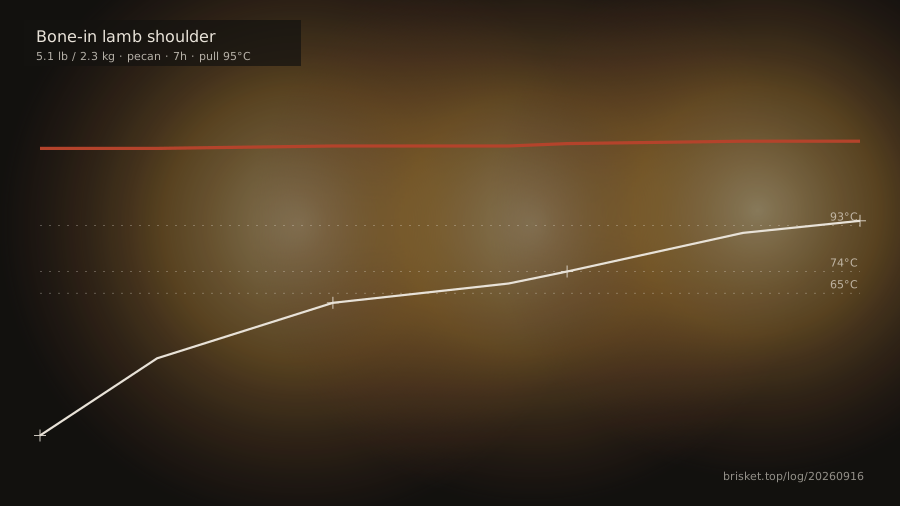
 21 Sep 2026
Whole packer brisket, dry brined 48 hours
Pecan
Gravity-fed charcoal
13.0 lb / 5.9 kg
Best flat texture of the year, bark a shade pale4.8/5
21 Sep 2026
Whole packer brisket, dry brined 48 hours
Pecan
Gravity-fed charcoal
13.0 lb / 5.9 kg
Best flat texture of the year, bark a shade pale4.8/5