Bone-in lamb shoulder · 5.1 lb / 2.3 kg · Ceramic kamado
Pulled lamb shoulder over pecan on a kamado
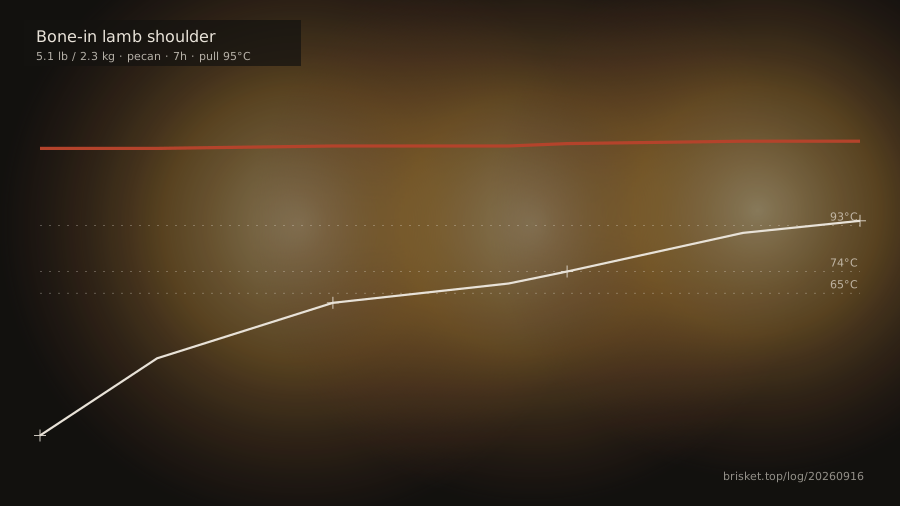
A 2.3 kg bone-in shoulder at 125°C over pecan for seven hours, papped at 74°C and rested an hour. The same technique as pulled pork with a completely different result on the plate: denser, savourier, and it needs a different sauce.
- Cook date11 Sep 2026
- Published16 Sep 2026
- Raw weight5.1 lb / 2.3 kg
- WoodPecan
- CookerCeramic kamado
Cook timeline
- 10:00 Shoulder on, fat side up, over the deflector Kamado stabilised at 125°C for 40 minutes before the meat went on Pit125°C Internal6°C +0m
- 11:00 One pecan chunk in Lamb takes smoke hard; one chunk is plenty on a kamado Pit125°C Internal38°C +1h
- 12:30 Rotated 180° The kamado runs hotter at the back hinge side Pit126°C Internal61°C +2h30
- 14:00 Stall; left alone Lamb stalls shorter than pork, about 70 minutes here Pit126°C Internal69°C +4h
- 14:30 Wrapped in peach paper Paper keeps the fat from pooling and keeps the bark firm Pit127°C Internal74°C +4h30
- 16:00 Probed; the blade bone was moving The bone is the honest test, as on any shoulder Pit128°C Internal90°C +6h
- 17:00 Pulled, rested 60 minutes, then pulled apart One hour rest; lamb shoulder reabsorbs more than pork and needs it Pit128°C Internal95°C +7h
Lamb shoulder against pork shoulder
Both are shoulder, both are full of collagen, both pull apart at 95°C. The differences are water content and flavour. Lamb shoulder holds less water, which is why it cooks two hours faster at the same chamber temperature, and lamb fat has a higher melting point, so it sets firm at room temperature rather than staying soft.
That last point matters when you serve it. Pulled lamb at room temperature has a waxy mouthfeel because the fat has set. It must be served hot, and it must be served with something acidic to cut the fat.
| Measure | Lamb shoulder | Pork shoulder |
|---|---|---|
| Time at 125°C to 95°C | 7 h | 9-11 h |
| Fat content | 25% | 22% |
| Fat melting point | Higher, sets firm | Lower, stays soft |
| Smoke tolerance | Lower — one chunk | Higher — two or three |
| Sauce | Sharp: vinegar, mint, yoghurt | Sweet: tomato, brown sugar |
The rub, and what not to put on it
Salt, pepper, garlic and dried oregano, with a little ground cumin. No sugar at all: lamb's own flavour is sweet enough and sugar in the rub fights the smoke. Salt at 1.6% by weight, applied the night before.
Do not add rosemary to the rub. Rosemary burns at 125°C over seven hours and turns bitter; if you want it, put the sprigs in the drip tray under the meat so they flavour the juices, not the crust.
- Salt 1.6%, pepper 0.8%, garlic, oregano, cumin
- No sugar in the rub — it fights the smoke on lamb
- Rosemary in the drip tray, never on the crust
- Score the fat cap lightly so the salt reaches the muscle
Paper, and why not foil
Lamb fat sets firm, and foil catches it in a puddle that the meat then sits in for three hours. Paper lets the excess render off into the drip tray, so the finished meat is richer in flavour rather than greasier in texture.
Wrapping at 74°C rather than at the start of the stall gives the bark two extra hours to set. The stall on this cook lasted seventy minutes, which is why the wrap came at minute 270 rather than minute 200.
| Method | Fat handling | Bark | Result |
|---|---|---|---|
| No wrap | Runs off freely | Very firm | Drier edges |
| Paper | Runs off, some held | Firm | Best balance |
| Foil | Pools and sits | Soft | Greasy mouthfeel |
| Pan with lid | Pools | Soft | Closer to braised |
Serving pulled lamb
It must be hot. Pull it apart with two forks, discarding the fat seams that have not rendered and the blade bone, and keep it in a covered tray at 65°C until it goes out. Ten minutes on the counter and the fat starts to set.
Serve with flatbread, a sharp yoghurt with lemon and garlic, pickled red onion and a herb salad with plenty of parsley and mint. Sauce on the side, if any — a vinegary chilli sauce, not a sweet one.
- Serve hot, in a covered tray at 65°C, never on the counter
- Yoghurt with lemon and garlic, not a cooked sauce
- Pickled red onion and a herb salad with mint and parsley
- Leftovers are better in a braise or a shepherd's pie than reheated as is
Cross-section notes
Lamb shoulder has the same collagen structure as pork shoulder but a stronger flavour and a harder fat. Sliced open at 95°C the meat separates into long strands along the grain rather than crumbling, and there is a distinct layer of fat between the two muscles that has rendered to a translucent jelly.
- Stall
- 69°C
- Wrap method
- Peach butcher paper
- Wrapped at
- 4h 30m
- Pulled at
- 95°C
- Rest
- 1h 00m
- Score
- 4.7/5
Verdict: Four hundred and twenty minutes for 2.3 kg, which is two hours less than a pork shoulder of the same weight. Lamb shoulder is denser, has less water to evaporate, and gets to 95°C faster than any other shoulder on this ledger.
Adjacent entries
 13 Aug 2026
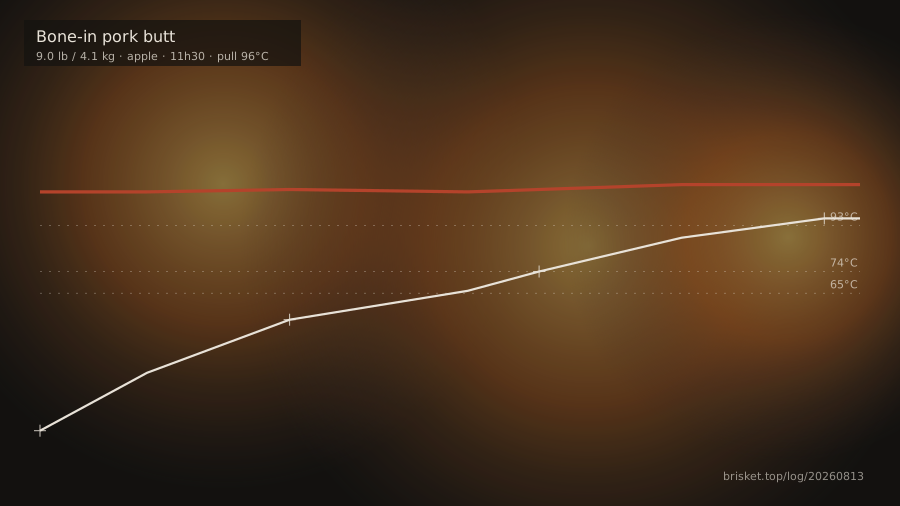
Bone-in pork butt
Apple
Bullet water smoker
9.0 lb / 4.1 kg
Bone slid out clean, bark stayed crisp through the wrap4.7/5
13 Aug 2026
Bone-in pork butt
Apple
Bullet water smoker
9.0 lb / 4.1 kg
Bone slid out clean, bark stayed crisp through the wrap4.7/5
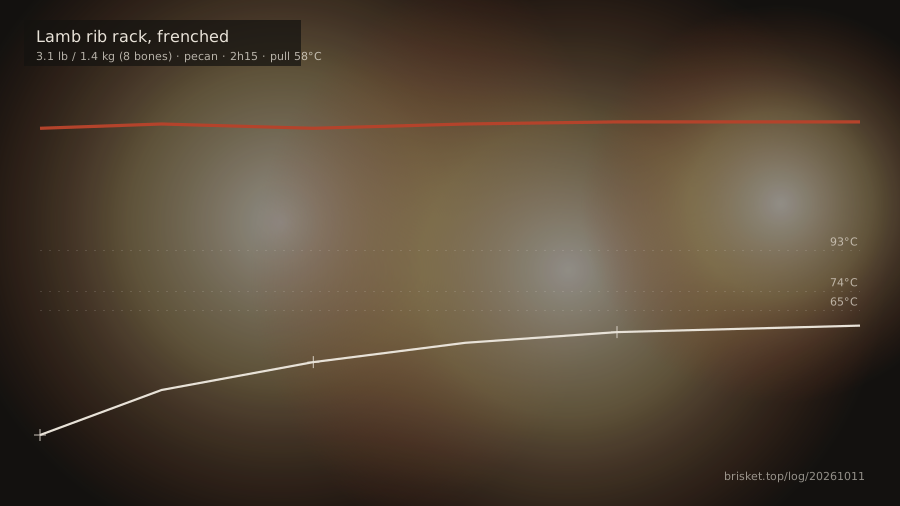
 21 Sep 2026
Whole packer brisket, dry brined 48 hours
Pecan
Gravity-fed charcoal
13.0 lb / 5.9 kg
Best flat texture of the year, bark a shade pale4.8/5
21 Sep 2026
Whole packer brisket, dry brined 48 hours
Pecan
Gravity-fed charcoal
13.0 lb / 5.9 kg
Best flat texture of the year, bark a shade pale4.8/5