Bone-in pork butt · 9.0 lb / 4.1 kg · Bullet water smoker
Bone-in pork butt, apple wood, overnight on a water smoker
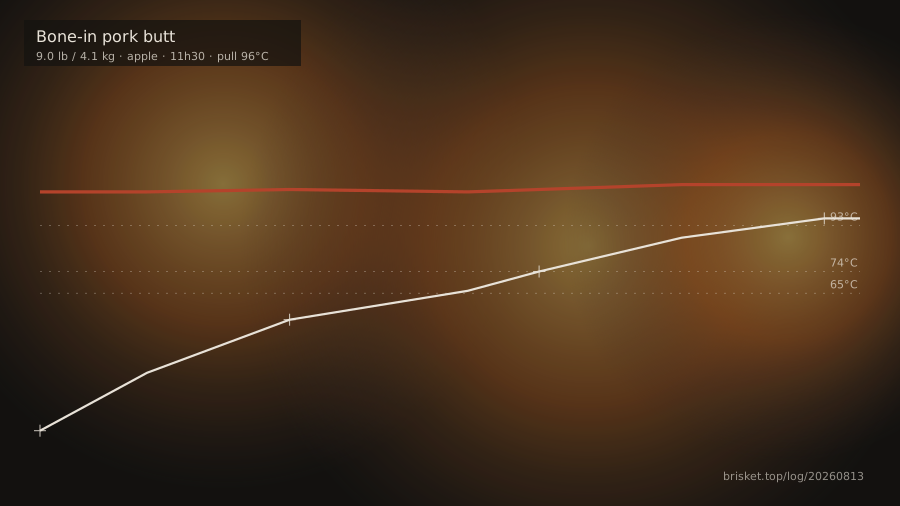
A 4.1 kg bone-in butt with the fat cap left on, cooked from nine at night to half past eight the next morning at 107°C with a full water pan, wrapped in foil at 74°C and rested ninety minutes.
- Cook date10 Aug 2026
- Published13 Aug 2026
- Raw weight9.0 lb / 4.1 kg
- WoodApple
- CookerBullet water smoker
Cook timeline
- 21:00 Butt on, fat side up, probe in the thickest part away from the bone Minion method: 15 lit briquettes on top of a full ring Pit107°C Internal8°C +0m
- 22:30 Nothing done, vents untouched Water pan full; the chamber will not move for six hours Pit107°C Internal32°C +1h30
- 00:30 Checked the water pan level Down 2 cm in three and a half hours; topped up with boiling water Pit108°C Internal54°C +3h30
- 03:00 Stall begins Pork stalls harder than beef because of the higher water content Pit107°C Internal66°C +6h
- 04:00 Wrapped in foil, returned fat side up Foil here, not paper: pulled pork wants soft bark, not crisp Pit108°C Internal74°C +7h
- 06:00 Drew off 300 ml of liquid and saved it This is the liquid that goes back into the pork after pulling Pit110°C Internal88°C +9h
- 08:00 Pulled; bone came out with no resistance The blade bone is the honest test on a butt, not the thermometer Pit110°C Internal96°C +11h
- 08:30 Rested 90 minutes wrapped in towels in a cooler Long rest pays off more on pork than on brisket Pit110°C Internal96°C +11h30
Why the water pan decides the schedule
A full water pan in a bullet smoker behaves like a thermal flywheel: water boils at 100°C, so the chamber cannot run much above 110°C while there is water in it. That is exactly what you want overnight, because it means the pit will not run away while you sleep. It is also why this cook took eleven and a half hours.
Half-filling the pan gives you a chamber at 118°C to 120°C and cuts about ninety minutes off the cook. That is the right call for a daytime cook. It is the wrong call overnight.
| Pan | Chamber | Time to 96°C | Bark |
|---|---|---|---|
| Full | 107-110°C | 11 h 30 m | Dark, soft, holds together |
| Half | 118-120°C | 9 h 55 m | Darker, drier edges |
| Dry pan | 125-130°C | 8 h 40 m | Hard shell, less smoke ring |
Rub, mustard and the honest reason for it
Yellow mustard went on first, about two tablespoons for the whole butt. It is not there for flavour; the vinegar and the emulsion give the rub something to stick to and it cooks off completely. Anyone who tells you they can taste it is tasting the rub.
The rub is brown sugar, paprika, salt, pepper, garlic and a little cayenne, applied the night before and left uncovered in the fridge for ten hours. Sugar on pork is fine — the chamber never gets hot enough to burn it, which is not true of a brisket cooked at 135°C.
- Yellow mustard: 2 tablespoons, rubbed in by hand
- Brown sugar: 3 tablespoons
- Sweet paprika: 2 tablespoons
- Kosher salt: 2 tablespoons
- Coarse black pepper: 1 tablespoon
- Granulated garlic: 2 teaspoons; cayenne: half a teaspoon
The stall on pork is not the same stall
Pork stalls at a higher temperature than beef — 71°C here rather than 65°C to 68°C — and it lasts proportionally longer, because a butt holds more free water than a brisket flat. This one sat between 70°C and 74°C for a little over two hours.
What you do about it is different too. Brisket wants paper to keep the bark firm. Pork wants foil, because the target texture is shreddable and a soft bark mixes into the pulled meat instead of fighting it. Wrapping at 74°C rather than at the stall's start means the bark had two extra hours to set first.
| Cut | Stall temperature | Stall length | Wrap |
|---|---|---|---|
| Pork butt, 4.1 kg | 71°C | 2 h 10 m | Foil |
| Brisket flat, 2.6 kg | 68°C | 3 h 00 m | Foil |
| Lamb shoulder, 2.3 kg | 69°C | 1 h 40 m | Paper |
Pulling, saucing and the liquid you should not throw away
Ninety minutes of rest, then the butt came out of the foil and the liquid was decanted into a jug. Three hundred millilitres of pork fat and gelatinous stock came out of this cook. Left to settle, the fat rises and sets; the stock underneath is the single best thing you can add back to pulled pork.
Pull with two forks or, better, with gloved hands. Discard the unrendered fat layer under the skin and any large gristle pockets. Then add back about half the defatted stock, a tablespoon at a time, until the meat is moist but not wet. Sauce goes on the side, not in the tray — dressed pork turns to mush within an hour.
- Rest: 90 minutes, wrapped in towels in a dry cooler
- Yield: 4.1 kg raw gave 2.35 kg pulled, a 57% yield
- Stock returned: 150 ml of the 300 ml collected, defatted
- Salt adjustment after pulling: none needed at this rub level
Cross-section notes
The money muscle at one end stayed intact and sliced into medallions; the rest collapsed into strands with almost no resistance. The smoke ring ran 9 mm, and there was a 1 cm layer of unrendered fat directly under the skin that had to be discarded from the first few pulls.
- Stall
- 71°C
- Wrap method
- Heavy foil
- Wrapped at
- 7h 00m
- Pulled at
- 96°C
- Rest
- 1h 30m
- Score
- 4.7/5
Verdict: Six hundred and ninety minutes for a 4.1 kg butt is slow even by low-and-slow standards, and it was the water pan that did it: a full pan holds the chamber down at 107°C whether you want it to or not. Running the pan half full would have saved 90 minutes.
Adjacent entries
 6 Sep 2026
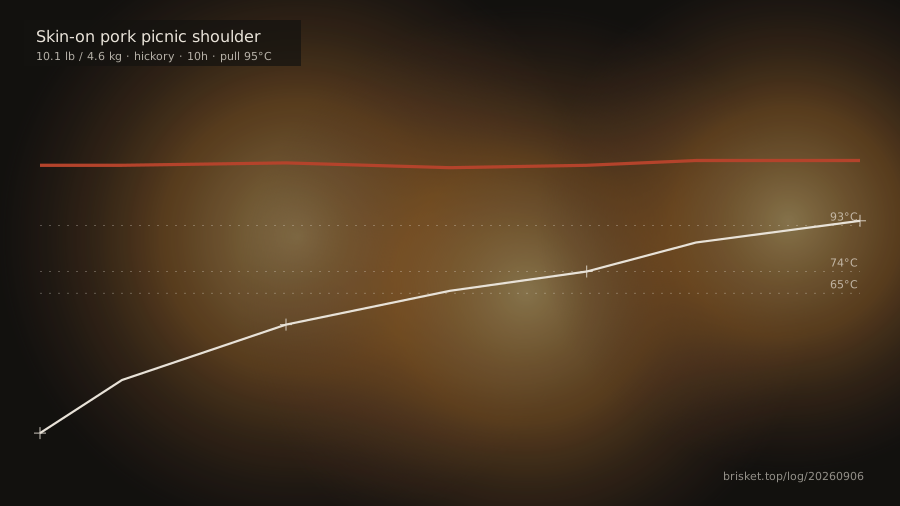
Skin-on pork picnic shoulder
Hickory
Ugly drum smoker
10.1 lb / 4.6 kg
Skin turned to leather; meat underneath was excellent4.2/5
6 Sep 2026
Skin-on pork picnic shoulder
Hickory
Ugly drum smoker
10.1 lb / 4.6 kg
Skin turned to leather; meat underneath was excellent4.2/5
 16 Oct 2026
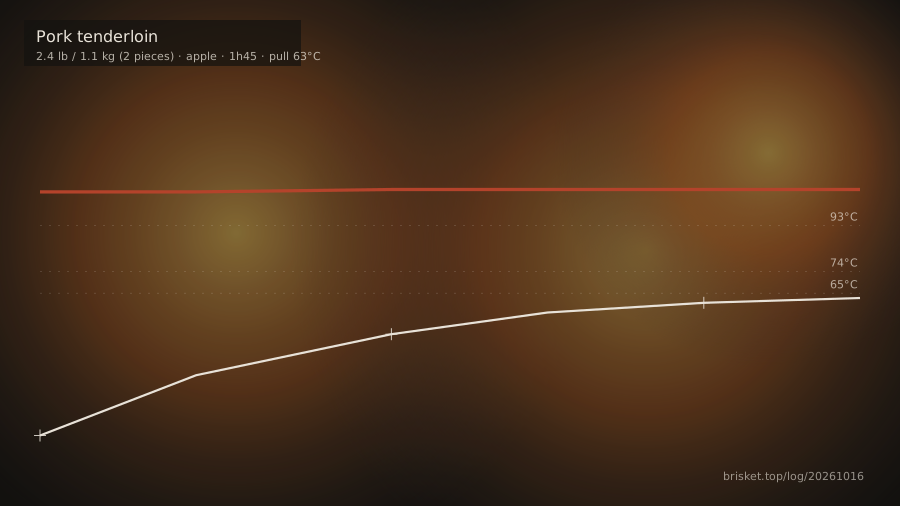
Pork tenderloin
Apple
Pellet grill
2.4 lb / 1.1 kg (2 pieces)
Juicy at the thick end, chalky at the tail3.8/5
16 Oct 2026
Pork tenderloin
Apple
Pellet grill
2.4 lb / 1.1 kg (2 pieces)
Juicy at the thick end, chalky at the tail3.8/5