Skin-on pork picnic shoulder · 10.1 lb / 4.6 kg · Ugly drum smoker
Skin-on picnic shoulder, hickory, ten hours unwrapped
A 4.6 kg picnic with the skin left on, cooked at 118°C over hickory in a drum for ten hours with no wrap at all. An experiment in what the skin contributes: it ruined the crackling and made the best pulled pork on the ledger.
- Cook date1 Sep 2026
- Published6 Sep 2026
- Raw weight10.1 lb / 4.6 kg
- WoodHickory
- CookerUgly drum smoker
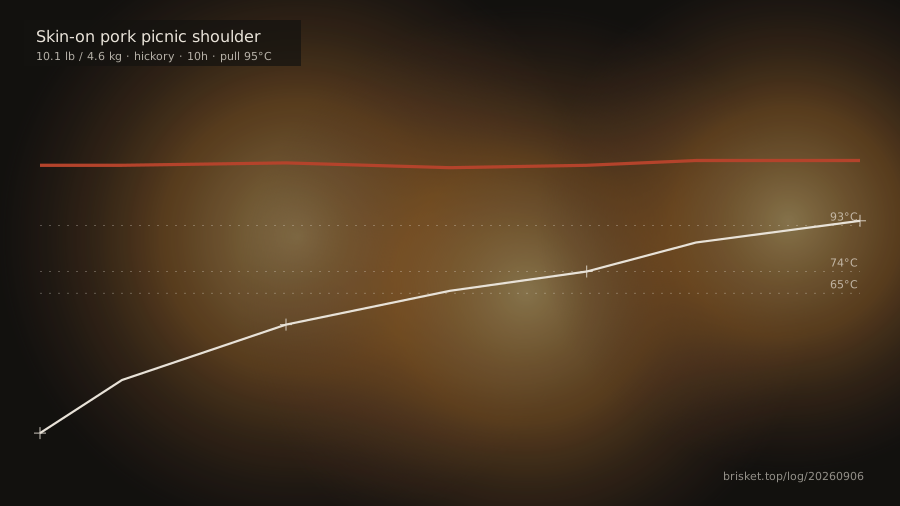
Cook timeline
- 06:00 Picnic on, skin up, over a diffuser plate Basket of 3 kg lump lit from one side, intake open two thirds Pit118°C Internal7°C +0m
- 07:00 Nothing done A drum settles fast; the first hour is the only unstable one Pit118°C Internal29°C +1h
- 09:00 Skin brushed with vinegar Vinegar does not soften the skin, but it does keep the surface from drying to a shell early Pit119°C Internal52°C +3h
- 11:00 Added 1 kg of lump Drums burn hot and fast; expect a fuel top-up at hour five Pit117°C Internal66°C +5h
- 12:40 Stall, nothing done No wrap on this cook by design — testing what bare skin does Pit118°C Internal74°C +6h40
- 14:00 Started probing every 30 minutes The blade bone is the test; movement in the bone means it is close Pit120°C Internal86°C +8h
- 16:00 Pulled; skin discarded before pulling The skin lifted off in one sheet and went into the bin Pit120°C Internal95°C +10h
Picnic and butt are not interchangeable
A butt is the upper shoulder; a picnic is the lower shoulder and leg, and it comes with a thick sheet of skin and a fat layer under it that a butt does not have. The picnic also has more connective tissue and a bigger bone, which is why it takes longer per kilo and yields less.
The skin is the interesting part. It is a moisture barrier on top and a fat reservoir underneath. Leaving it on through the cook means the meat beneath it is continuously basted; it also means you will not get edible crackling at pulled-pork temperatures.
| Measure | Butt (4.1 kg) | Picnic (4.6 kg) |
|---|---|---|
| Time per kg to 95°C | 2 h 48 m | 2 h 10 m |
| Yield after pulling | 57% | 61% |
| Skin | Thin cap, edible bits | Thick sheet, inedible |
| Moisture of pulled meat | Good | Best on the ledger |
Running a drum smoker
A 208 litre drum with a 3 kg basket of lump, lit from one side, is the cheapest route to a stable 118°C chamber. It also has the least control: the intake is a single ball valve and the exhaust is two 2.5 cm holes. You steer with the valve and you accept a wider band than a cabinet gives you.
The drum used 4 kg of lump over ten hours, which is about 40% less fuel than the same cook in an offset. The catch is that the fuel is charcoal, not wood, so the smoke character is lighter — two hickory chunks in the basket were the only wood involved.
- 3 kg lump in the basket, lit from one side; 1 kg top-up at hour five
- Intake ball valve two thirds open the whole cook
- Two hickory chunks, 10 cm each, buried in the basket at the start
- Grate temperature band over ten hours: 117°C to 120°C
Not wrapping, and what it costs
No wrap on this cook was deliberate: with a skin shield on top, the moisture loss is slower than an unwrapped butt, and the point was to see whether that made the wrap unnecessary. The chamber stayed at 118°C and the stall lasted two hours and forty minutes — longer than the wrapped butt at the same pit temperature, but not catastrophically so.
The cost is time and fuel, roughly ninety extra minutes and half a kilo of charcoal. The benefit is a firmer bark on the meat under the skin and a simpler cook with no foil handling at hour seven.
| Measure | Wrapped butt | Unwrapped picnic |
|---|---|---|
| Stall length | 2 h 10 m | 2 h 40 m |
| Total cook | 11 h 30 m | 10 h 00 m |
| Bark at the end | Soft | Firm |
| Moisture after pulling | Good | Excellent |
Dealing with the skin honestly
At 95°C internal the skin is a sheet of collagen that has tightened, dried and set. It cannot be pulled, cut with a table knife, or chewed. It did its job during the cook as a lid and a baster and then it is waste.
If you want crackling from a picnic, the sequence is different: cook it as here, then cut the skin off in one sheet, scrape the fat from the underside, dry it, and fry it separately in 180°C oil for four minutes. That works and it is a legitimate use — it is just not a part of the barbecue.
- Remove the skin in one piece before pulling, while it is hot
- Scrape the underside fat, dry the skin for an hour, then fry at 180°C
- Or simply discard it and keep the 300 ml of fat that rendered under it
- The rendered fat is the better prize: it makes the best roast potatoes on the site
Cross-section notes
The picnic's skin is a single continuous sheet with a thick fat layer under it, unlike a butt which has a thin cap. Cooking it un wrapped at 118°C rendered the fat completely and left the skin as a 4 mm sheet of tough collagen that could not be cut with a table knife. The meat under it, however, was the most moist pulled pork on the ledger, because that fat layer basted it for ten hours.
- Stall
- 74°C
- Wrap method
- No wrap (bare bark)
- Wrapped at
- never wrapped
- Pulled at
- 95°C
- Rest
- 1h 00m
- Score
- 4.2/5
Verdict: Keep the skin on for the cook and throw it away at the end. It is a fat reservoir and a heat shield, and it is not edible at 95°C no matter how long you give it. Anyone selling you crackling from a picnic is selling you something they fried separately.
Adjacent entries
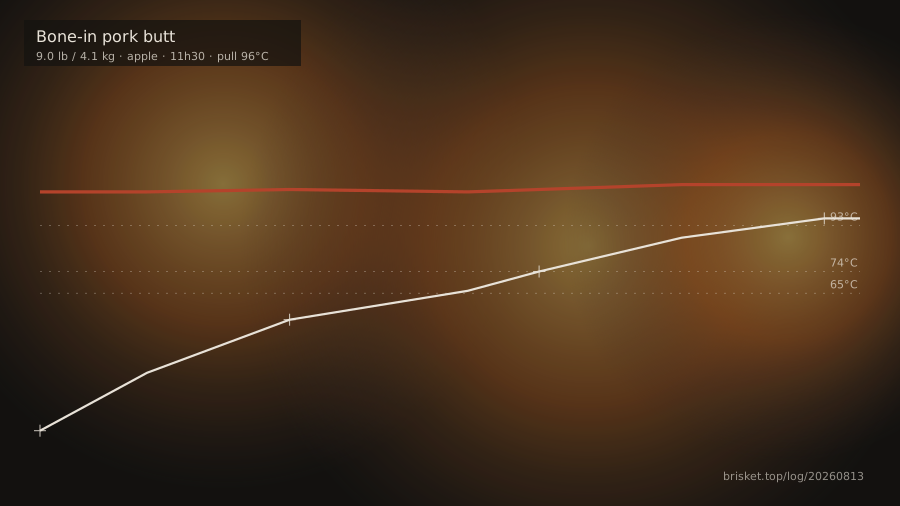 23 Sep 2026
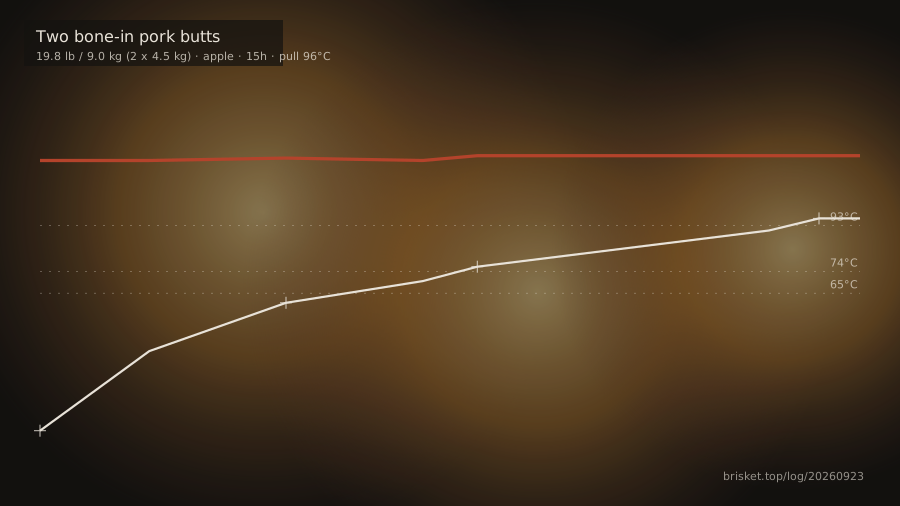
Two bone-in pork butts
Apple
Insulated cabinet
19.8 lb / 9.0 kg (2 x 4.5 kg)
Held four hours and still served at 63°C4.5/5
23 Sep 2026
Two bone-in pork butts
Apple
Insulated cabinet
19.8 lb / 9.0 kg (2 x 4.5 kg)
Held four hours and still served at 63°C4.5/5
 29 Sep 2026
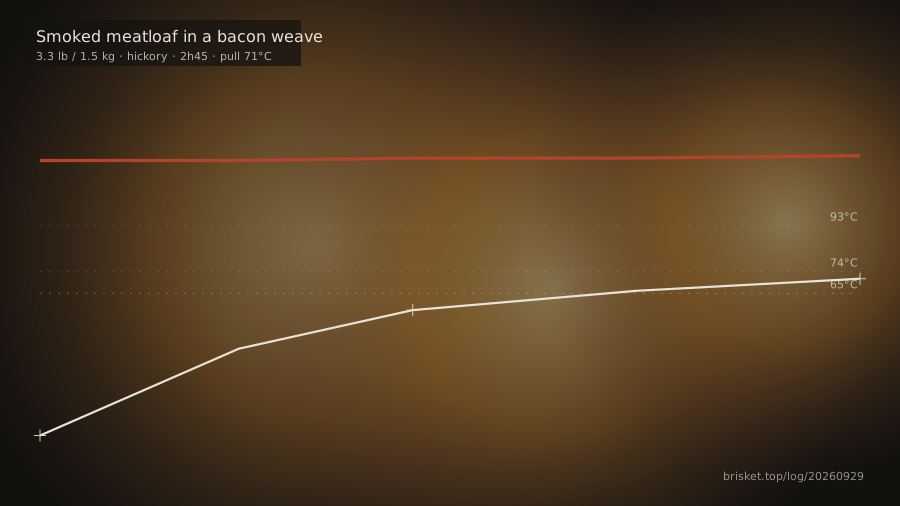
Smoked meatloaf in a bacon weave
Hickory
Insulated cabinet
3.3 lb / 1.5 kg
Bacon lattice crisp on top, sides soft; sliced clean at 2 cm4.3/5
29 Sep 2026
Smoked meatloaf in a bacon weave
Hickory
Insulated cabinet
3.3 lb / 1.5 kg
Bacon lattice crisp on top, sides soft; sliced clean at 2 cm4.3/5