About
Last updated: 2026-09-18
Low & Slow Ledger is a working notebook of barbecue cooks, published with the measurements intact.
What this site is
Every entry in the ledger is one cook that actually happened on a backyard pit: a cut of meat, a weight taken on a kitchen scale, the splits that went in the firebox, a pit temperature sampled every twenty to thirty minutes, and an internal temperature taken with a calibrated dual-probe thermometer.
The point is the numbers. Recipe writing about barbecue tends to round everything to "about 225°F for an hour a pound", which is fine until the stall arrives early or the pit runs hot in the wind. A log that keeps the readings lets you compare your cook against a real one instead of against a slogan.
How an entry is recorded
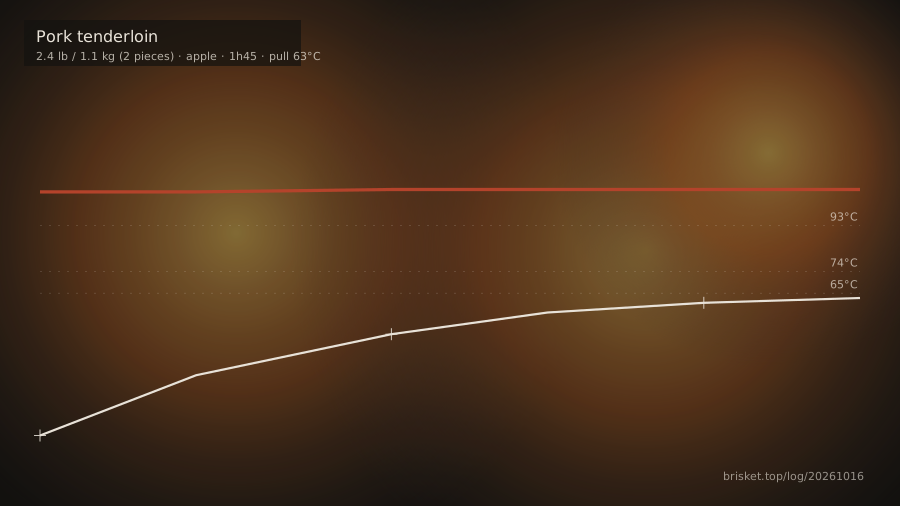
The pit temperature and the internal temperature are written down together at each check, along with what changed: a split added, the intake opened a quarter turn, the meat wrapped, the wrap vented. Times are local to the cook and counted from fire-up, so the trace on each page always starts at minute zero.
- Cut, grade if known, and raw weight before trimming
- Wood species and how many splits went in over the cook
- Pit temperature and internal temperature at every check
- The stall temperature and how long it lasted
- Wrap method and the internal temperature it was wrapped at
- Rest time, covered or uncovered, and the final slice direction
Editing and corrections
Logs are published on a drip schedule rather than all at once, so the index grows over time. When a later cook contradicts an earlier conclusion — usually about wrap timing or rest length — the newer entry says so explicitly rather than quietly overwriting the old one. Corrections are noted in the entry that supersedes the earlier result.
We do not run affiliate links on rubs, cookers or thermometers, and no entry is sponsored. If a cooker or a brand of charcoal is named, it is because that is what the cook used.
Who writes this
One author: a home cook with a 1/4-inch offset stick burner, a 57 cm kettle and a bullet smoker, cooking roughly twice a month and weighing everything. The methods described here are the ones that have worked repeatedly on those cookers, at those altitudes and in that weather. Your pit will behave differently; that is what the readings are for.