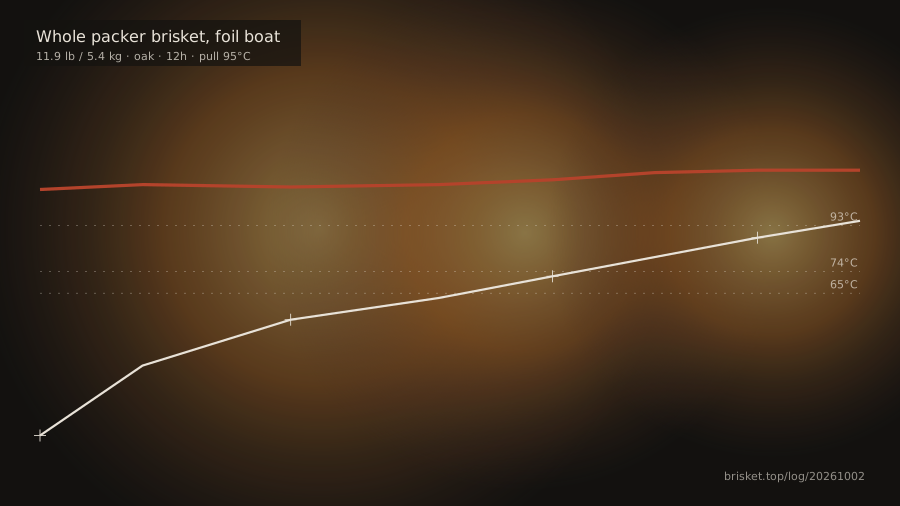
Whole packer brisket, foil boat · 11.9 lb / 5.4 kg · Offset stick burner
Foil boat brisket: the wrap that leaves the bark alone
A 5.4 kg packer cooked 12 hours over oak at 110°C to 116°C, wrapped in a foil boat at 72°C so the top surface stayed exposed. The goal was bark; the side effect was four hours of fat braising the underside.
- Cook date28 Sep 2026
- Published2 Oct 2026
- Raw weight11.9 lb / 5.4 kg
- WoodOak
- CookerOffset stick burner
Cook timeline
- 03:40 Packer on, fat side up Fire lit 45 minutes before with three oak splits Pit108°C Internal6°C +0m
- 05:10 Split added, intake nudged open Bark is already tacky at 90 minutes — good sign for the boat Pit110°C Internal35°C +1h30
- 07:20 Rotated the packer 180°, no spritz A dry surface is what makes the boat's top crust work Pit109°C Internal54°C +3h40
- 09:30 Stall, lid closed Sixth hour and the flat is at 63°C — slower than the 110°C cooks I ran in July Pit110°C Internal63°C +5h50
- 11:10 Foil boat built: foil folded up all four sides, top left open Two layers of heavy foil, the seam rolled twice so the fat cannot escape Pit112°C Internal72°C +7h30
- 12:40 Drew off 250 ml of fat with a turkey baster, saved it This fat is the point's best friend later; keep it in a jar in the fridge Pit115°C Internal80°C +9h
- 14:10 Probe test, top crust already hard Do not cover it now; covering would undo four hours of crust Pit116°C Internal88°C +10h30
- 15:40 Pulled, rested in the boat 20 minutes, then cooler Three hours in the cooler after that Pit116°C Internal95°C +12h
What a foil boat actually is
A boat is two layers of heavy foil folded up around the four sides of the brisket with the top left completely open. Fat and juices collect in the bottom and the meat sits in them; the top of the packer is in dry chamber air the whole time.
This is a middle path between wrapping and not wrapping. Fully wrapped brisket steams its own bark soft; unwrapped brisket stalls for four hours and dries at the thin end. The boat keeps the stall short and keeps the bark dry, and the price is that the two faces of the same piece of meat end up different.
| Method | Hours on smoke | Bark | Evenness |
|---|---|---|---|
| Foil boat at 72°C | 12 h 00 m | Hard crust, cracks under the knife | Top firmer than bottom |
| Peach paper at 74°C | 13 h 00 m | Firm, dark, bends slightly | Even |
| Heavy foil at 74°C | 10 h 45 m | Soft, matte, no crust | Even but flat |
| No wrap at all | 15 h 30 m | Very hard, slightly bitter | Thin end dries out |
Building a boat that does not leak
The failure mode of a foil boat is a seam that gives way at hour three and dumps 400 ml of fat onto the firebox, which produces a flare and a bitter taste. The fix is mechanical: use heavy foil, not standard, and roll every seam twice before folding the sides up.
Fold the sides to about 6 cm, roughly a third of the packer's height. Higher walls trap more steam and start to behave like a full wrap; lower walls let the fat run off.
- Two sheets of 45 cm heavy foil, overlapped by 15 cm and rolled twice
- Sides folded up 6 cm, corners crimped rather than folded flat
- Boat sits directly on the grate, not on a pan — a pan insulates the bottom and slows the braise
- Baste the point with the collected fat once, at the two-hour mark, and never again
Reading the two halves of the same brisket
Because the top and bottom cook differently in a boat, the probe reading becomes an average of two textures. The useful test is to probe from the side at both the top surface and the bottom surface of the flat. Here the bottom tested tender 35 minutes before the top did.
Pull on the firmer of the two, not the softer. If the top is not ready, the bottom will keep improving for another half hour without going mushy, because it is sitting in fat at 100°C rather than in dry air at 116°C.
| Position | Internal at pull | Resistance | Texture at slice |
|---|---|---|---|
| Top surface of flat | 95°C | Slight | Firm, clean cut |
| Bottom surface of flat | 96°C | Almost none | Very soft, almost pulled |
What to do with 400 ml of brisket fat
The boat collects roughly 400 ml of rendered fat and concentrated juices from a 5.4 kg packer. Skim the fat off the top after it sets in the fridge and keep both parts. The fat is the best thing to toss burnt ends in before they go back on, and it will keep for a month in a sealed jar.
The juices underneath set to a gel because of the collagen. Warm them and use them to moisten sliced flat that has been held too long, which is more useful than any sauce.
- Fat: 250-300 ml, keeps a month refrigerated, use for burnt ends and roast potatoes
- Gel: 100-120 ml of concentrated stock, dilute 1:3 with hot water for a serving jus
- Do not salt either one — they are already seasoned from the rub
Cross-section notes
The top of the packer never touched foil, so the bark dried to a hard, dark crust that cracked under the knife instead of bending. The underside, sitting in the boat, braised in its own fat for the last four hours and came out noticeably softer than the top. Fat cap on the boat side rendered completely; the top cap was still 5 mm thick at slice.
- Stall
- 66°C
- Wrap method
- Foil boat (bottom only)
- Wrapped at
- 7h 30m
- Pulled at
- 95°C
- Rest
- 3h 00m
- Score
- 4.7/5
Verdict: The foil boat is the best wrap for bark and the worst for evenness: top and bottom of the same packer end up as two different textures. It also collects about 400 ml of fat, which is the best cooking medium you will ever have for the point.
Adjacent entries
 21 Sep 2026
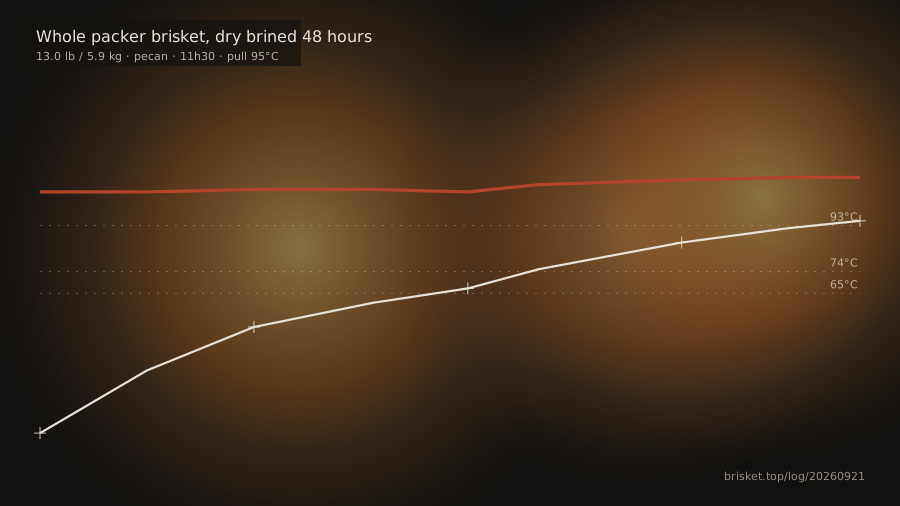
Whole packer brisket, dry brined 48 hours
Pecan
Gravity-fed charcoal
13.0 lb / 5.9 kg
Best flat texture of the year, bark a shade pale4.8/5
21 Sep 2026
Whole packer brisket, dry brined 48 hours
Pecan
Gravity-fed charcoal
13.0 lb / 5.9 kg
Best flat texture of the year, bark a shade pale4.8/5
 21 Aug 2026
Brisket flat, separated
Hickory
Insulated cabinet
5.7 lb / 2.6 kg
Even slice, faint smoke ring, no bark crunch4/5
21 Aug 2026
Brisket flat, separated
Hickory
Insulated cabinet
5.7 lb / 2.6 kg
Even slice, faint smoke ring, no bark crunch4/5