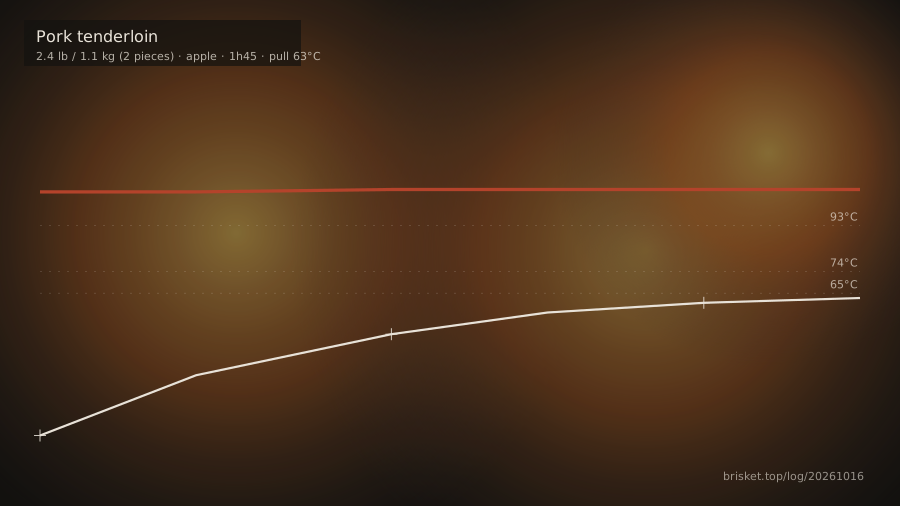
Brisket flat, separated · 5.7 lb / 2.6 kg · Insulated cabinet
Brisket flat on its own, hickory, 135°C hot and fast
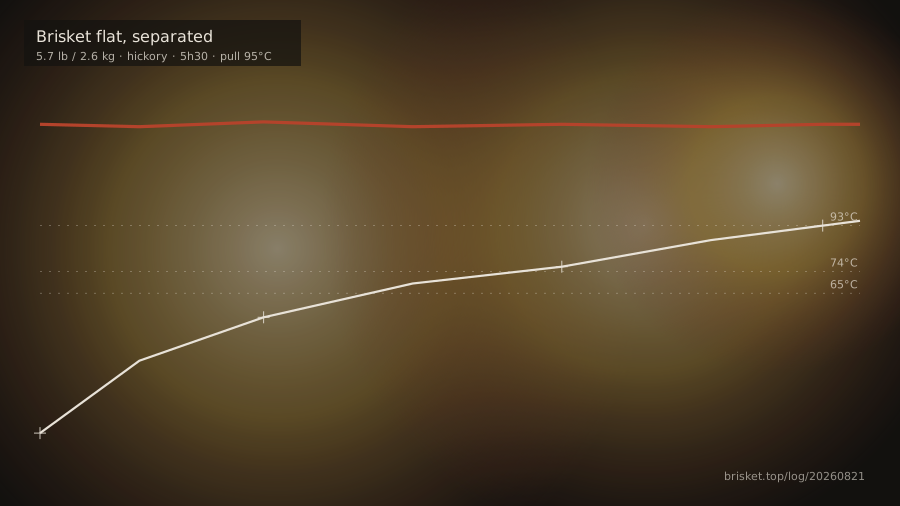
The flat separated from the point, cooked at 135°C over hickory in an insulated cabinet and wrapped in foil at 76°C. Five and a half hours start to finish, which makes it the fastest brisket entry in the ledger and also the least impressive on the board.
- Cook date18 Aug 2026
- Published21 Aug 2026
- Raw weight5.7 lb / 2.6 kg
- WoodHickory
- CookerInsulated cabinet
Cook timeline
- 13:20 Flat on, fat side down, probe from the side into the thick end Cabinet was at 135°C before the meat went in and stayed there Pit135°C Internal7°C +0m
- 14:00 First spritz with apple cider vinegar A lean flat needs surface moisture more than it needs more smoke Pit134°C Internal37°C +40m
- 14:50 Second spritz, rotated the flat 180° The cabinet has a 6°C hot corner; rotation every 90 minutes evens it out Pit136°C Internal55°C +1h30
- 15:50 Stall arrived early, held steady At 135°C chamber the stall is short and shallow — 71°C was its floor Pit134°C Internal69°C +2h30
- 16:50 Wrapped in heavy foil with 2 tbsp of beef stock Foil here is deliberate: on a lean flat, braising is the only thing that keeps the crumb from going chalky Pit135°C Internal76°C +3h30
- 17:50 Checked the wrap seal, no venting Every vent is lost moisture the flat cannot afford Pit134°C Internal87°C +4h30
- 18:35 Probe test every 15 minutes A separate entry lists the same flat pulled at 93°C and it sliced tougher Pit135°C Internal93°C +5h15
- 18:50 Pulled, rested in the foil on the counter Sixty minutes only; a lean flat goes from tender to mushy fast Pit135°C Internal95°C +5h30
Why a flat alone behaves differently
A whole packer gets its moistness from the point sitting on top of it — fat and collagen from the point bastes the flat for the entire cook. Strip that away and you are cooking a 2.6 kg slab that is roughly 4% intramuscular fat and has a thin end that will be at 90°C while the thick end is still at 70°C.
The practical consequence is that hot and fast is the right call. A long low cook on a bare flat mostly dries it out, because there is no fat reservoir to keep the surface wet through the second half.
- Cabinet pre-heated to 135°C for 40 minutes before the meat went in
- Probe inserted from the side at the thick end, not down through the top
- Fat cap trimmed to 5 mm and left on, cooking fat side down against the grate
- Two spritzes of apple cider vinegar in the first 90 minutes, then none
The wrap decision: foil, not paper
Everything on this site about brisket wraps argues for peach paper. This cook is the exception, and the reason is fat. Paper is breathable; it lets steam escape and keeps bark firm. Foil traps everything, and on a lean cut that trapped steam is the only thing standing between a tender slice and a chalky one.
Two tablespoons of beef stock went in under the meat before sealing. That is not a marinade or a sauce — it is 30 ml of liquid that flashes to steam and keeps the wrap atmosphere saturated.
| Method | Time to 95°C | Bark | Crumb at slice |
|---|---|---|---|
| Foil + 30 ml stock | 5 h 30 m | Soft, matte | Even, moist, holds together |
| Peach paper (previous cook) | 6 h 15 m | Firmer, darker | Drier at the thin end |
Reading a lean flat with a probe
The temperature tells you when to start testing, not when to stop. Between 93°C and 96°C this flat went from slight resistance to almost none in 35 minutes. The test I use is to push the probe in at the thick end and count the resistance in the palm of my hand, not to look at the number.
Pull too early and the slice tears along the grain when you cut it. Pull too late and it crumbles into the blade. On a flat with no point to hide behind, both mistakes are visible on the board.
- 93°C — probe enters with clear resistance, slice would still be chewy
- 95°C — probe enters with almost none, best slice of the three checks
- 97°C — the same flat at the same pit temperature crumbled under the knife
Slicing a bare flat
The flat's grain runs along the long axis with a slight lean. Cut across it at a right angle to the long edge and each slice is 6 mm thick and holds together. Cut 6 mm thick at 20° off square and you get a slice that pulls apart into strings when you pick it up.
Rest time matters more than usual here. Sixty minutes was right; ninety made the crumb mushy at the thin end, because the foil keeps cooking the meat long after it is off the fire.
Cross-section notes
A flat alone has almost no intramuscular fat, so the crumb is uniform and a little tight right through. The smoke ring barely reached 4 mm because the wrap went on at 76°C and steam did the rest of the work. Fat cover was under 5 mm after trimming, which is why the top surface reads drier than the interior.
- Stall
- 71°C
- Wrap method
- Heavy foil
- Wrapped at
- 3h 30m
- Pulled at
- 95°C
- Rest
- 1h 00m
- Score
- 4/5
Verdict: Hot and fast works on a flat and it is genuinely useful on a weeknight, but the trade is bark. Three hundred and thirty minutes at 135°C gives a slice that eats well in a sandwich and disappoints on a board.
Adjacent entries
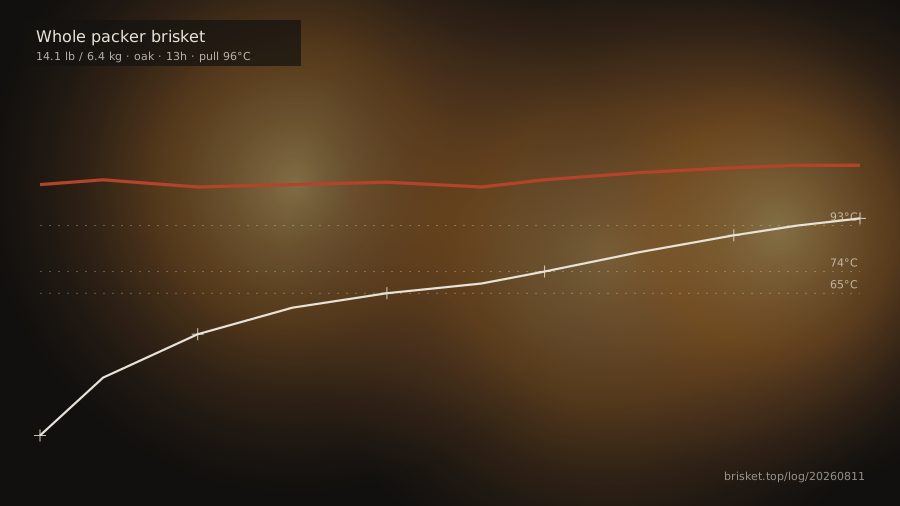 2 Sep 2026
Brisket point, cubed
Cherry
Bullet water smoker
4.9 lb / 2.2 kg
Sticky, glossy cubes; sauce reduced further than intended4.5/5
2 Sep 2026
Brisket point, cubed
Cherry
Bullet water smoker
4.9 lb / 2.2 kg
Sticky, glossy cubes; sauce reduced further than intended4.5/5
 29 Sep 2026
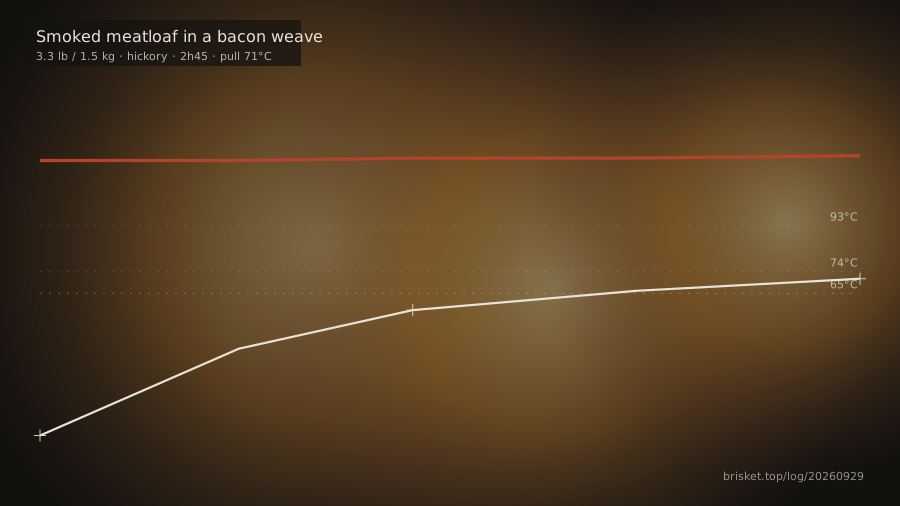
Smoked meatloaf in a bacon weave
Hickory
Insulated cabinet
3.3 lb / 1.5 kg
Bacon lattice crisp on top, sides soft; sliced clean at 2 cm4.3/5
29 Sep 2026
Smoked meatloaf in a bacon weave
Hickory
Insulated cabinet
3.3 lb / 1.5 kg
Bacon lattice crisp on top, sides soft; sliced clean at 2 cm4.3/5