Brisket point, cubed · 4.9 lb / 2.2 kg · Bullet water smoker
Burnt ends from a 2.2 kg point, cherry over a water smoker
The point separated from a packer, smoked for seven hours at 118°C and finished as burnt ends: cubed at 2.5 cm, returned to the pan with its own rendered fat, sauce and 90 more minutes of heat.
- Cook date29 Aug 2026
- Published2 Sep 2026
- Raw weight4.9 lb / 2.2 kg
- WoodCherry
- CookerBullet water smoker
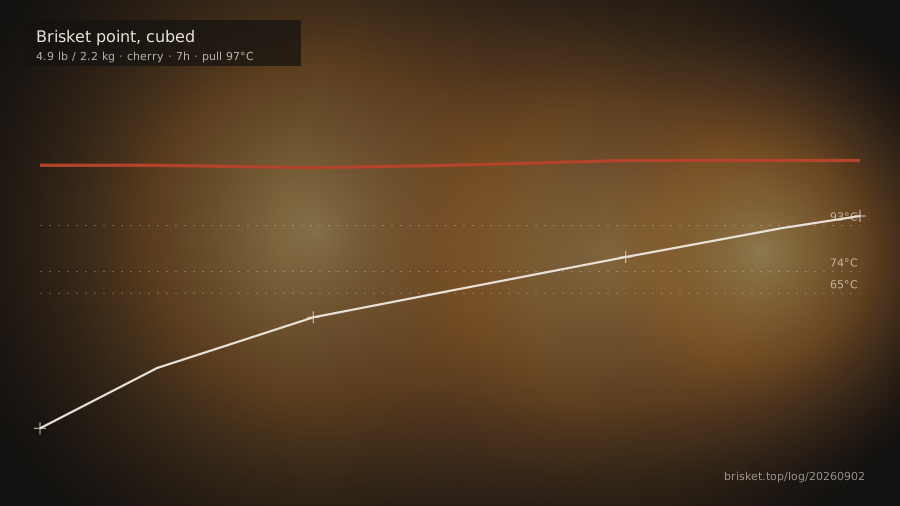
Cook timeline
- 08:00 Point on, fat side up, over a full water pan Water pan refilled with hot water so the chamber does not dip Pit118°C Internal9°C +0m
- 09:00 Two cherry splits added Cherry colours the surface fast; it is doing cosmetic work here Pit118°C Internal34°C +1h
- 10:20 Rotated the point 180° Bullets run 8°C hotter at the back edge Pit117°C Internal55°C +2h20
- 11:30 First sign of the stall Fat renders and cools the surface; this cut stalls harder than a flat Pit118°C Internal66°C +3h30
- 13:00 Wrapped in a half pan with tight foil lid A pan rather than paper because the goal is catching the rendered fat Pit120°C Internal80°C +5h
- 14:20 Checked with a skewer, not the probe On a cubed cook the probe reads the average, not the edges Pit120°C Internal92°C +6h20
- 15:00 Cubed at 2.5 cm and returned to the pan with the rendered fat Cubing hot means the pieces stay moist; letting them cool first squeezes out juice Pit120°C Internal97°C +7h
The point is the only cut that makes real burnt ends
Burnt ends started as the trimmings that got left in the pit too long and came out candied. To make them deliberately you need a cut with enough intramuscular fat to survive a second cooking. That is the point. A flat cubed and sauced turns into beef jerky with a glaze on it.
The point sitting on this cook had 26% fat by the time it came off the smoker, and about 300 ml of it rendered into the pan during the wrapped stage. That rendered fat is not waste — it goes back over the cubes and is what makes them glossy rather than sticky.
| Cut | Fat after smoking | Result after 90 min in sauce |
|---|---|---|
| Point (this cook) | 26% | Glossy, holds shape, gives slightly under the tooth |
| Flat, same rub | 5% | Firm, dry at the edges, tastes of sauce more than beef |
Smoking the point before cubing
The first stage is a normal cook: pit at 118°C, water pan full, until the point is probe tender at 97°C. It is not cooked to slicing doneness — it is taken past it on purpose, because the cubes are going to be handled and reheated and a slice-textured point would fall apart in the pan.
Cherry did almost nothing to the flavour here and a great deal to the colour. If you want the flavour contribution, pecan or a single hickory split is the better call; cherry is best used when you want the surface to go mahogany before the sauce goes on.
- Pit temperature held at 118°C for seven hours, never above 122°C
- Water pan refilled at hour 3 with boiling water, not cold
- One rotation at hour 2 because bullets run hot at the back edge
- No spritz, no mopping — the water pan already keeps the chamber humid
Cubing, saucing and the second cook
The point rested 20 minutes, no more, then went onto a board and was cubed at 2.5 cm with a long slicing knife in single strokes. Sawing makes ragged cubes that shed fat and dry out at the edges.
The cubes went back into the pan with the rendered fat, two tablespoons of sauce and a teaspoon of honey, tossed to coat, and back into the pit uncovered at 120°C for 90 minutes. Uncovered matters: a lid traps steam and you get braised beef rather than candied edges.
| Elapsed | Action | Texture |
|---|---|---|
| 0 min | Cubed, tossed with fat and sauce | Wet, sauce pooling |
| 30 min | Turned once | Sauce clinging, edges darkening |
| 60 min | Turned once | Glossy, edges firm |
| 90 min | Out, rested 10 minutes | Tacky — 30 minutes too long |
What went wrong and what to change
The last batch of cubes was tacky rather than glossy and the sauce had reduced past the point where it coats the back of a spoon. Two hours total in the pan at 120°C was too long; 90 minutes is the number. If the sauce is still loose at 90 minutes, the fix is a hotter chamber for 15 minutes, not more time.
The other change next time is salt. The cubes get sauce, and sauce is salty, so the rub on the first stage should go down to about 1% of the trimmed weight rather than the 1.2% used here.
Cross-section notes
Cubing at 2.5 cm and returning the pieces to a pan means every face that was bark becomes a face that caramelises again. The interior of the cubes is uniform and slightly stringy, which is exactly what you want here because the sauce needs something to cling to. Fat content is the reason this cut works and a flat would not: 26% fat means the cubes stay wet through a second hour of heat.
- Stall
- 72°C
- Wrap method
- Half pan with tight foil lid
- Wrapped at
- 5h 00m
- Pulled at
- 97°C
- Rest
- 30m
- Score
- 4.5/5
Verdict: The point makes better burnt ends than the flat by a wide margin, and the reason is fat, not flavour. Two hours in the sauce is 40 minutes too long — the last batch was tacky rather than glossy.
Adjacent entries
 12 Sep 2026
Bone-in beef chuck roast
Oak
Offset stick burner
7.1 lb / 3.2 kg
Cubed, sauced and returned: burnt ends without buying a brisket4.6/5
12 Sep 2026
Bone-in beef chuck roast
Oak
Offset stick burner
7.1 lb / 3.2 kg
Cubed, sauced and returned: burnt ends without buying a brisket4.6/5
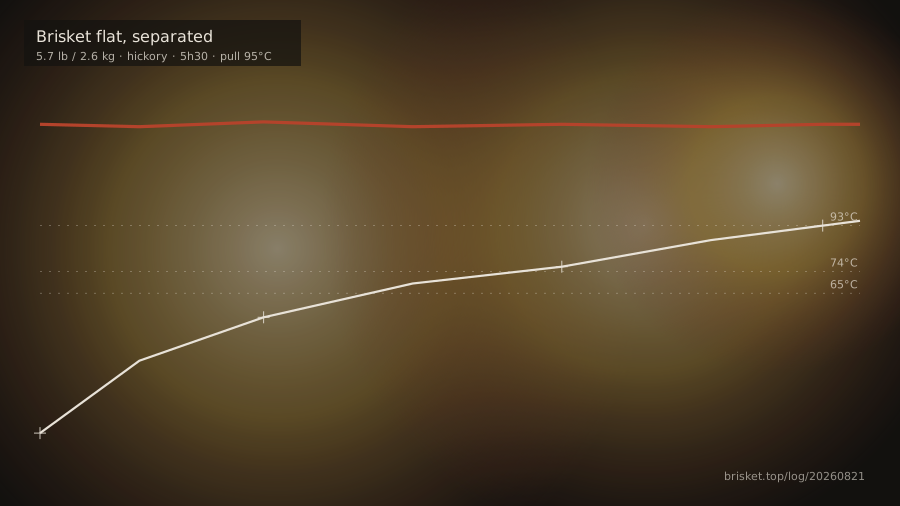
 21 Aug 2026
Brisket flat, separated
Hickory
Insulated cabinet
5.7 lb / 2.6 kg
Even slice, faint smoke ring, no bark crunch4/5
21 Aug 2026
Brisket flat, separated
Hickory
Insulated cabinet
5.7 lb / 2.6 kg
Even slice, faint smoke ring, no bark crunch4/5