Bone-in beef chuck roast · 7.1 lb / 3.2 kg · Offset stick burner
Chuck roast burnt ends, eight hours and a third of the price
A 3.2 kg bone-in chuck smoked at 110°C over oak for eight hours, panned at 74°C, rested and then cubed, sauced and returned to the grate. The poor man's burnt ends, and there is nothing poor about them.
- Cook date7 Sep 2026
- Published12 Sep 2026
- Raw weight7.1 lb / 3.2 kg
- WoodOak
- CookerOffset stick burner
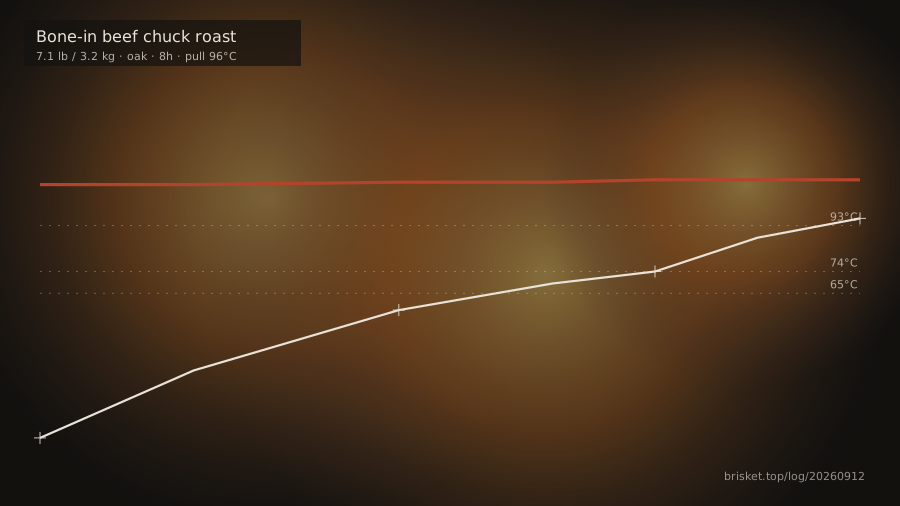
Cook timeline
- 08:00 Chuck on, fat side up, bone left in Salt 1.8% and pepper 1% applied 12 hours ahead, uncovered Pit110°C Internal5°C +0m
- 09:30 One oak split in A split every ninety minutes keeps a 1/4 inch offset at 110°C Pit110°C Internal33°C +1h30
- 11:30 Rotated 180° The firebox end runs 12°C hotter on this cooker Pit111°C Internal58°C +3h30
- 13:00 Stall begins; left alone for an hour Chuck stalls early because the fat content is high and the mass is thick Pit111°C Internal69°C +5h
- 14:00 Moved into a half pan with tight foil lid Pan rather than paper: this meat is going to be cubed and sauced anyway Pit112°C Internal74°C +6h
- 15:00 Probed; still resisting between the muscles Four muscles means four different rates; wait for all of them Pit112°C Internal88°C +7h
- 16:00 Pulled, rested 45 minutes, then cubed and returned Cubed to 3 cm, tossed in sauce, back on the grate at 120°C for 30 minutes Pit112°C Internal96°C +8h
Why chuck behaves like brisket but costs less
Chuck is the shoulder, and like the brisket point it is a working muscle full of collagen with a good amount of intramuscular fat. It needs the same temperatures and the same patience. What it does not have is a demand-driven price, because nobody makes chuck into a signature dish.
The one difference that matters is the muscle structure. A brisket has two muscles with a clear seam; a chuck has four or more with seams running in different directions. That means it does not slice into clean pencil-thick slices the way a flat does — it pulls or it cubes, and cubing is what this cook is for.
| Measure | Chuck roast | Packer brisket |
|---|---|---|
| Price per kg | about a third | — |
| Muscles | 4 or more | 2 |
| Time at 110°C | 8 h | 12-16 h |
| Best use | Pulled, or cubed as burnt ends | Sliced flat, cubed point |
| Forgiveness | High | Moderate |
The first stage: getting to 96°C
Salt and pepper only, applied twelve hours ahead and left uncovered so the surface dries. Chuck takes a heavy rub but it does not need one; the point of this cook is the meat and the sauce comes later.
The stall hits at 69°C and lasts about an hour and a half. Panning at 74°C rather than at the stall's start keeps the bark on top from going soft in the first three hours. Total time to 96°C is eight hours at 110°C.
- Salt 1.8%, pepper 1%, twelve hours ahead, uncovered
- Chamber 110-112°C, one oak split every ninety minutes
- Stall at 69°C, lasting about 1 h 30 m
- Pan with a tight foil lid at 74°C
- Rest 45 minutes before cubing — hot meat tears instead of cutting
The second stage: cubing, saucing and returning
Rest the roast, then cut it into 3 cm cubes, discarding the bone, the big connective seams and any large fat pockets. A 3.2 kg roast gives about 1.6 kg of cubes after trimming, because chuck has a lot of waste.
Toss the cubes in a thin sauce — tomato, cider vinegar, brown sugar, Worcestershire, chilli — and put them back on the grate at 120°C for thirty minutes, uncovered. The sauce reduces and glazes; the exposed faces of the cubes dry and firm. That is what makes them burnt ends rather than stewed beef.
| Stage | Weight | Note |
|---|---|---|
| Raw, bone-in | 3.2 kg | — |
| After the cook and rest | 2.05 kg | 36% loss, mostly water |
| After trimming for cubes | 1.60 kg | Bone, seams and fat removed |
| Finished burnt ends | 1.35 kg | After 30 minutes sauced |
Sauce, and the thirty minutes that matter
The sauce for burnt ends should be thinner than a serving sauce, because it is going to reduce on the meat. Two parts tomato, one part cider vinegar, brown sugar to taste, a spoon of Worcestershire and chilli to whatever level you want. It should taste a little too sharp on the spoon — it will sweeten and concentrate on the grate.
Thirty minutes is the right time. Twenty and the glaze is still wet; forty-five and the corners are hard. Turn the cubes once at fifteen minutes and put them back in the same pan so the sauce that drips off is caught and can be spooned back over.
- Sauce thinner than a serving sauce, and sharper than you think it should be
- 3 cm cubes, tossed to coat, back on the grate at 120°C
- 30 minutes uncovered, turned once at 15
- Serve in the pan with the reduced sauce spooned over; do not drown them
Cross-section notes
Chuck is not one muscle. The cross-section shows at least four — the shoulder clod, the underblade, the chuck roll and a band of connective tissue between them — each with its own fiber direction. Cooked to 96°C the whole thing gives way. Cubed, sauced and returned to the grate for thirty minutes, the pieces firm up into something very close to point burnt ends.
- Stall
- 69°C
- Wrap method
- Half pan with tight foil lid
- Wrapped at
- 5h 00m
- Pulled at
- 96°C
- Rest
- 45m
- Score
- 4.6/5
Verdict: Eight hours and roughly a third of the price of a packer brisket. The first stage gives you pulled beef; the second stage gives you burnt ends. Two dishes from one roast, which is the best value on this ledger.
Adjacent entries
 2 Oct 2026
Whole packer brisket, foil boat
Oak
Offset stick burner
11.9 lb / 5.4 kg
Crispest bark of any wrap method tried this year4.7/5
2 Oct 2026
Whole packer brisket, foil boat
Oak
Offset stick burner
11.9 lb / 5.4 kg
Crispest bark of any wrap method tried this year4.7/5
 25 Sep 2026
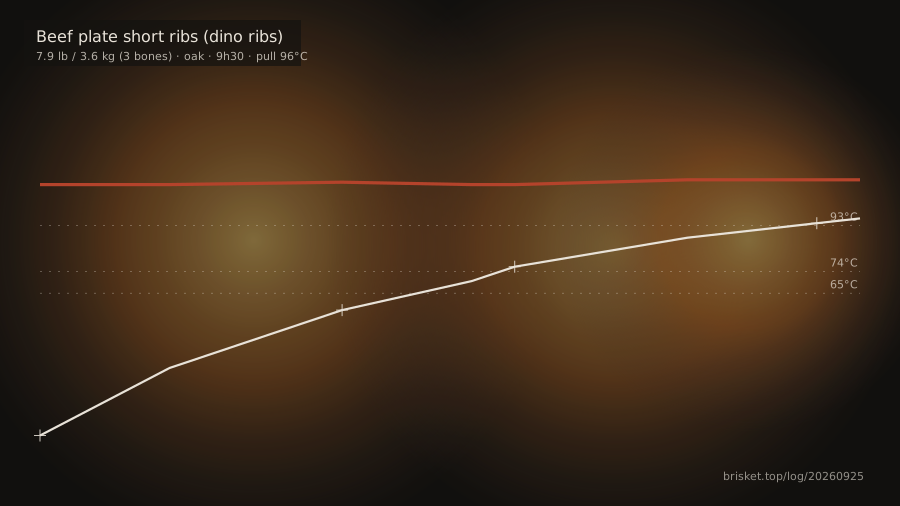
Beef plate short ribs (dino ribs)
Oak
Offset stick burner
7.9 lb / 3.6 kg (3 bones)
Slice held together on the fork; the best single bite on the ledger4.8/5
25 Sep 2026
Beef plate short ribs (dino ribs)
Oak
Offset stick burner
7.9 lb / 3.6 kg (3 bones)
Slice held together on the fork; the best single bite on the ledger4.8/5