Beef plate short ribs (dino ribs) · 7.9 lb / 3.6 kg (3 bones) · Offset stick burner
Beef plate short ribs, nine and a half hours over oak
A three-bone plate of short ribs, 3.6 kg, cooked at 110°C in an offset for nine and a half hours, wrapped in peach paper at 76°C and rested an hour. The most forgiving beef in a smoker and the most expensive-looking thing to bring to a table.
- Cook date20 Sep 2026
- Published25 Sep 2026
- Raw weight7.9 lb / 3.6 kg (3 bones)
- WoodOak
- CookerOffset stick burner
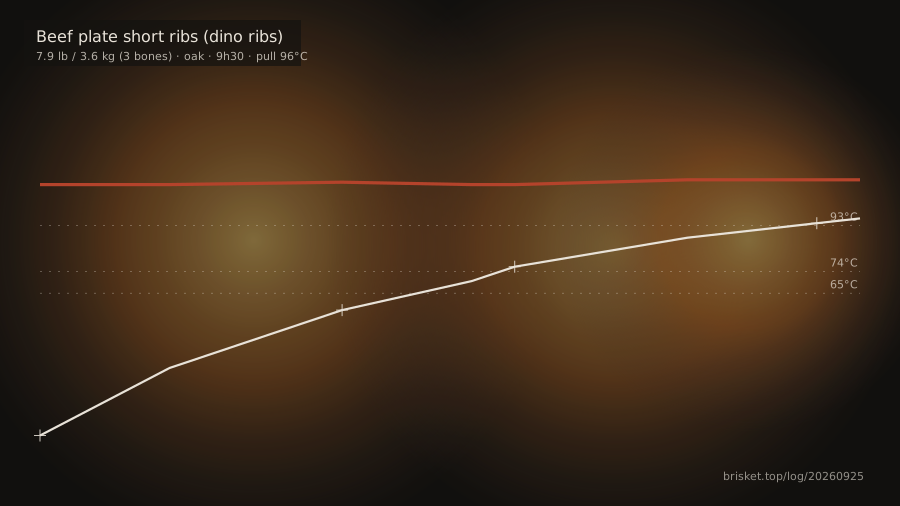
Cook timeline
- 07:00 Three-bone plate on, bone side down, fat cap trimmed to 6 mm Trim to 6 mm, not to nothing: that fat is what bastes the muscle for nine hours Pit110°C Internal6°C +0m
- 08:30 Added one oak split A split every ninety minutes holds 110°C in a 1/4 inch steel offset Pit110°C Internal34°C +1h30
- 10:30 Rotated the plate 180° The firebox end of the chamber runs 12°C hotter on this cooker Pit111°C Internal58°C +3h30
- 12:00 Stall begins Short ribs stall early and long because of the fat content Pit110°C Internal70°C +5h
- 12:30 Wrapped in peach paper Paper, not foil: the bark on a short rib is worth preserving Pit110°C Internal76°C +5h30
- 14:30 Probed; still firm between the bones Between the bones, not on top of them, is the only honest reading Pit112°C Internal88°C +7h30
- 16:00 Probe slid in with almost no resistance The fat between the bones has rendered; the meat is giving way Pit112°C Internal94°C +9h
- 16:30 Pulled, rested 1 hour in paper, then sliced on the bone One bone per portion; cut between the bones after the rest, never before Pit112°C Internal96°C +9h30
Buying plate ribs and not chuck ribs
Plate short ribs are ribs four, five and six, and they are long and flat with a thick, even meat layer. Chuck short ribs are ribs one to four and they are shorter, with a curved bone and much more gristle. Both are sold as short ribs and they cook very differently.
Ask for plate, and ask for the bones to be left in and the plate left whole. Cut into individual bones, the meat contracts and the pieces cook unevenly. A three or four bone plate holds together and slices more cleanly.
| Measure | Plate | Chuck |
|---|---|---|
| Bone length | 15-20 cm | 8-12 cm |
| Meat layer | Thick, even | Thin, tapering |
| Gristle | Little | A lot |
| Cook time at 110°C | 9-10 h | 6-7 h |
| Slice | Clean, holds on the fork | Shreds, or needs long braising |
Salt, and how much pepper
Short ribs take a heavy hand. Salt at 1.8% of weight and coarse black pepper at 1.2%, applied four hours ahead and left at room temperature for the last hour. Unlike a brisket, a short rib has enough fat that a thick pepper crust does not dry into a hard shell.
No sugar in the rub for this cook. At 110°C sugar will not burn, but it will caramelise into a sticky layer that fights the paper wrap at hour five.
- Salt 1.8% by weight, pepper 1.2%, applied four hours ahead
- No sugar — it turns tacky and sticks to the paper
- Trim the fat cap to 6 mm, square, with a sharp knife
- Leave the membrane on the bone side; it holds the plate together
Why short ribs are the forgiving cut
A ribeye is ruined in twenty minutes either side of medium rare. A short rib is good from 94°C to 99°C and the window is closer to two hours at 110°C, because the fat and collagen buffer everything: more time simply means more rendered fat and softer meat, right up to the point where it falls apart.
This cook hit the stall at 70°C and stayed there for two hours and ten minutes. Wrapping at 76°C rather than at the start of the stall left the bark to set for the first five and a half hours, which is why the slices have a crust rather than a coating.
| Cut | Target | Ideal window | Failure mode |
|---|---|---|---|
| Plate short rib | 96°C | 94-99°C (2 h) | Falls off the bone |
| Packer brisket | 96°C | 94-98°C (1 h 30) | Dry flat |
| Chuck roast | 95°C | 92-98°C (1 h 30) | Shreds |
| Ribeye | 52°C | 50-56°C (20 m) | Overcooked |
Slicing and serving a plate rib
Rest an hour in the paper, then cut between the bones with a long knife in one stroke. Do not saw. Each portion should be one bone with its meat attached, and the slice should hold together when you lift it on a fork — if it hangs, it is over, and if it resists, it is under.
Serve with something sharp. Short ribs are very rich, and pickled onions, a vinegar slaw or a horseradish cream does more for the plate than any sauce. There is a 60 ml pool of rendered fat in the paper at the end; keep it, strain it, and use it for potatoes.
- Rest 60 minutes in paper, unwrapped for the last 10 so the bark re-firms
- Cut between the bones, one stroke, one bone per portion
- Reserve the rendered fat from the paper — about 60 ml per plate
- Pairs with pickles and vinegar, not with sweet sauce
Cross-section notes
Three bones, plate-cut, about 1.2 kg each. The cross-section runs: a 6 mm bark, a band of rendered fat, a thick layer of muscle with the grain running bone-to-bone, and then the bone. Cooked to 96°C the muscle separates into three distinct bands per rib, each with its own fat seam, which is what makes a short rib slice rather than shred.
- Stall
- 72°C
- Wrap method
- Peach butcher paper
- Wrapped at
- 5h 30m
- Pulled at
- 96°C
- Rest
- 1h 00m
- Score
- 4.8/5
Verdict: Nine and a half hours and no wrap for the first five and a half of them. Short ribs are the most forgiving beef cut in a smoker: they have so much fat and collagen that the window between underdone and overdone is nearly two hours wide, against twenty minutes for a ribeye.
Adjacent entries
 2 Oct 2026
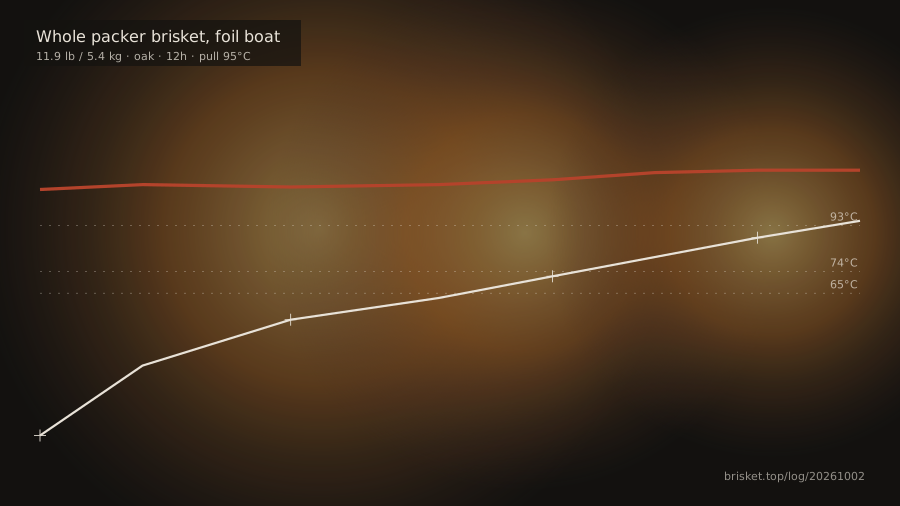
Whole packer brisket, foil boat
Oak
Offset stick burner
11.9 lb / 5.4 kg
Crispest bark of any wrap method tried this year4.7/5
2 Oct 2026
Whole packer brisket, foil boat
Oak
Offset stick burner
11.9 lb / 5.4 kg
Crispest bark of any wrap method tried this year4.7/5
 11 Aug 2026
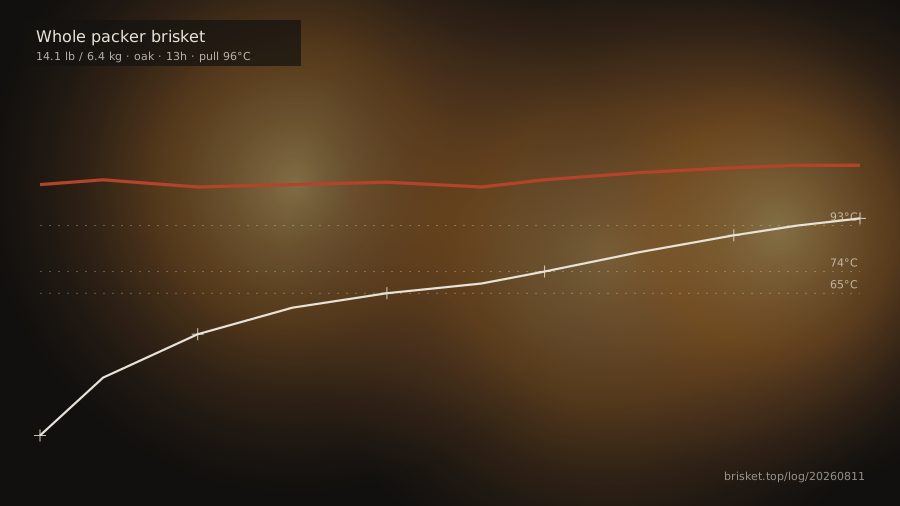
Whole packer brisket
Oak
Offset stick burner
14.1 lb / 6.4 kg
Clean bark, flat slightly dry at the thin end4.5/5
11 Aug 2026
Whole packer brisket
Oak
Offset stick burner
14.1 lb / 6.4 kg
Clean bark, flat slightly dry at the thin end4.5/5