Brisket flat, cured for pastrami · 11.2 lb / 5.1 kg · Insulated cabinet
Pastrami from a 5.1 kg brisket flat, five days in brine
A flat cured for five days in a brine with Prague powder, pickling spice, brown sugar and garlic, then smoked over oak at 120°C for ten hours, chilled overnight and sliced at 2 mm. The longest recipe on the ledger, with most of the time spent doing nothing.
- Cook date8 Oct 2026
- Published14 Oct 2026
- Raw weight11.2 lb / 5.1 kg
- WoodOak
- CookerInsulated cabinet
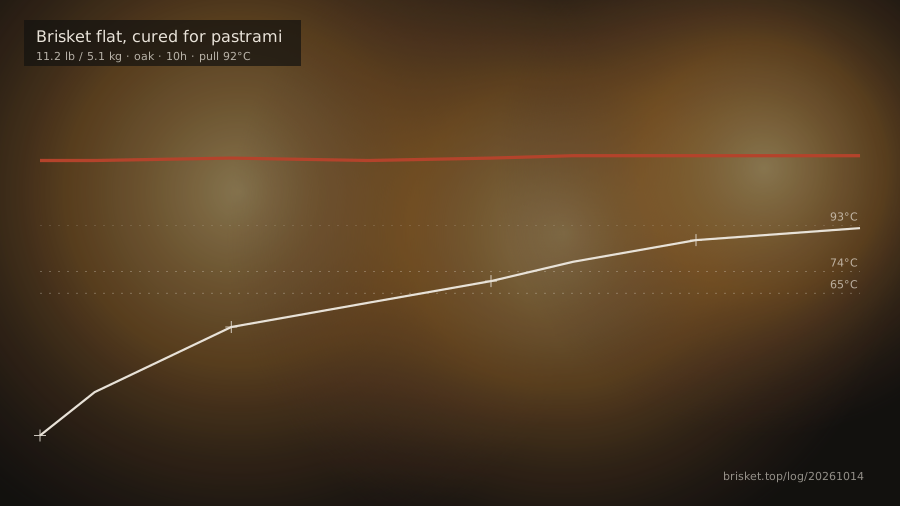
Cook timeline
- 07:00 Cured flat rinsed, patted dry, rubbed with coarse pepper and coriander Rinsed under cold water for 4 minutes to pull surface salt back down Pit120°C Internal6°C +0m
- 07:40 On the grate, fat side up, over a dry water pan Dry pan for pastrami: steam softens the crust that the pepper needs to set into Pit120°C Internal24°C +40m
- 09:20 Two oak splits in Cured meat takes smoke differently; the ring is already fixed pink so wood is for flavour only Pit121°C Internal51°C +2h20
- 11:00 Nothing done The cure raises the water-holding capacity, so this cook stalls later than a fresh brisket Pit120°C Internal61°C +4h
- 12:30 Stall, held steady Fifty minutes at 70°C, then it moved again Pit121°C Internal70°C +5h30
- 13:30 Wrapped in foil with 60 ml of water Just water, no stock — stock would fight the cure Pit122°C Internal78°C +6h30
- 15:00 Checked the seal Pastrami goes from 87 to 92°C quickly; check every 15 minutes from here Pit122°C Internal87°C +8h
- 17:00 Pulled, cooled on the counter for 1 hour, then into the fridge overnight Twelve hours cold before slicing — this is the step that makes it work Pit122°C Internal92°C +10h
The brine, by weight not by feel
Brine percentages are relative to the meat plus the water, not to the meat alone, and getting that wrong is the usual reason a home pastrami comes out either bland at the centre or unpleasantly salty at the edge. This brine is 2.2% salt and 0.25% Prague powder No. 1 by total weight.
The Prague powder is not optional. It is what fixes the meat's colour to that deep pink and, more importantly, what protects a five-day cure from the bacteria that a plain salt brine would not hold back at fridge temperature.
| Ingredient | Amount | % of total |
|---|---|---|
| Water | 4.0 L | 44% |
| Kosher salt | 200 g | 2.2% |
| Prague powder No. 1 | 23 g | 0.25% |
| Brown sugar | 90 g | 1.0% |
| Pickling spice | 45 g | 0.5% |
| Garlic, crushed | 6 cloves | — |
Five days, and how to know it is done
The flat sat fully submerged in a food-grade bag in the fridge for five days, turned once a day. Curing time scales with thickness, not weight: roughly one day per 1 cm of thickness measured at the thickest point, plus two days. This flat was 6 cm thick at its deepest, so five days.
The test is colour. Cut a 2 cm slice from the thick end and look at the centre. If it is grey, the cure has not reached the middle and it needs another day. If it is pink all the way through, it is done.
- Keep the bag at 2°C to 4°C, fully submerged, weighted down with a plate if it floats
- Turn once a day so the brine reaches every face
- Cut the test slice from the thickest point, never from the thin end
- After curing, rinse for 4 minutes under cold running water and pat completely dry before rubbing
Smoking cured meat at 120°C
Pastrami is smoked hotter than fresh brisket, at 120°C rather than 110°C, because the cure has already done the water-holding work and there is no stall to nurse. This cook ran ten hours to 92°C with a single 50-minute stall.
The rub is coarse black pepper and cracked coriander seed, roughly 3:1, applied heavily. It will look like too much. It is not — most of it falls off during the chill and the slice, and what remains is the crust that defines the cut.
| Measure | Pastrami (cured) | Fresh packer |
|---|---|---|
| Chamber temperature | 120°C | 110°C |
| Time to 92°C | 10 h 00 m | 13 h 00 m |
| Length of stall | 50 min | 3 h 00 m |
| Slice thickness | 2 mm | 6 mm |
The overnight chill that makes slicing possible
This is the step that separates a good pastrami from a pile of shreds. At 92°C straight off the pit, the flat is too soft to take a thin blade: the slice compresses and tears. Twelve hours at 4°C firms the crumb enough that a 2 mm slice comes off the knife whole.
Slice it cold and then steam it to serve, or steam the whole piece back to 60°C and slice hot. Cold slicing gives better control; hot slicing gives a better sandwich. Either way, never slice it warm off the pit.
- Cool 1 hour on the counter, then 12 hours uncovered in the fridge
- Slice across the grain at 2 mm, on a slicer if you have one and a long knife if you do not
- Leftovers keep 5 days refrigerated, 3 months frozen, sliced and interleaved with paper
- Steam to serve, or griddle the slices dry for 40 seconds a side
Cross-section notes
A five-day brine turns the entire flat uniform pink, not just the 6 mm ring a smoked brisket gets. The crumb is dense and holds a 2 mm slice without shredding, which is the whole point of pastrami. Fat content drops to about 12% because the brine pulls water and the long cook renders the cap down to almost nothing.
- Stall
- 70°C
- Wrap method
- Heavy foil
- Wrapped at
- 6h 30m
- Pulled at
- 92°C
- Rest
- 12h 00m
- Score
- 4.6/5
Verdict: Twelve hours of cold rest is the step nobody mentions and the one that makes it sliceable. Straight off the pit at 92°C the same flat shredded under the knife; after an overnight chill it cut at 2 mm.
Adjacent entries
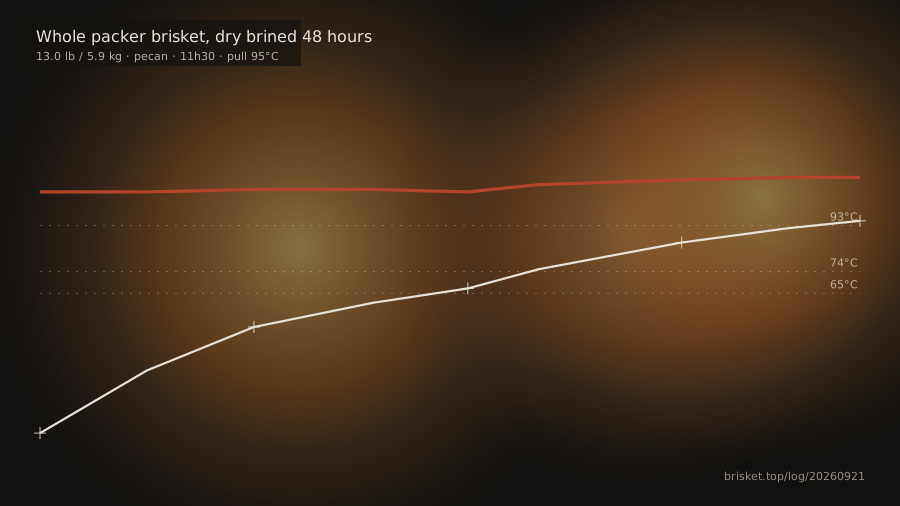 11 Aug 2026
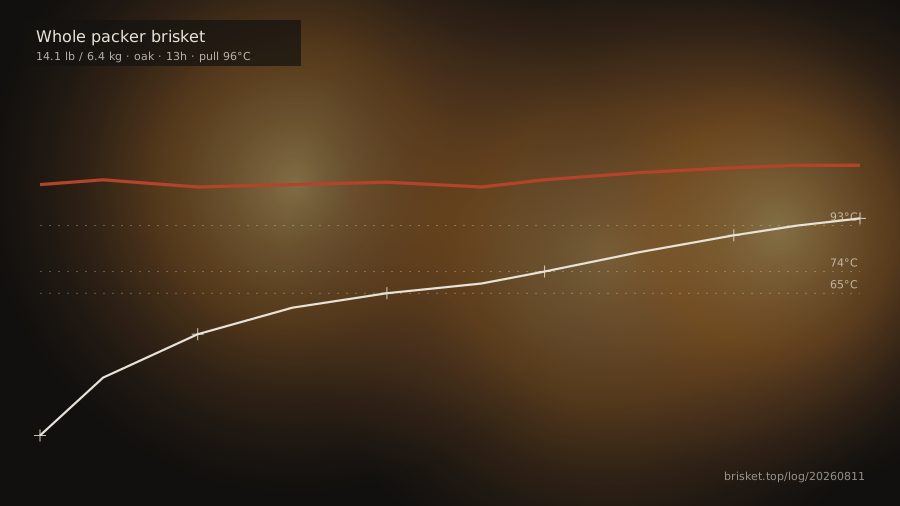
Whole packer brisket
Oak
Offset stick burner
14.1 lb / 6.4 kg
Clean bark, flat slightly dry at the thin end4.5/5
11 Aug 2026
Whole packer brisket
Oak
Offset stick burner
14.1 lb / 6.4 kg
Clean bark, flat slightly dry at the thin end4.5/5
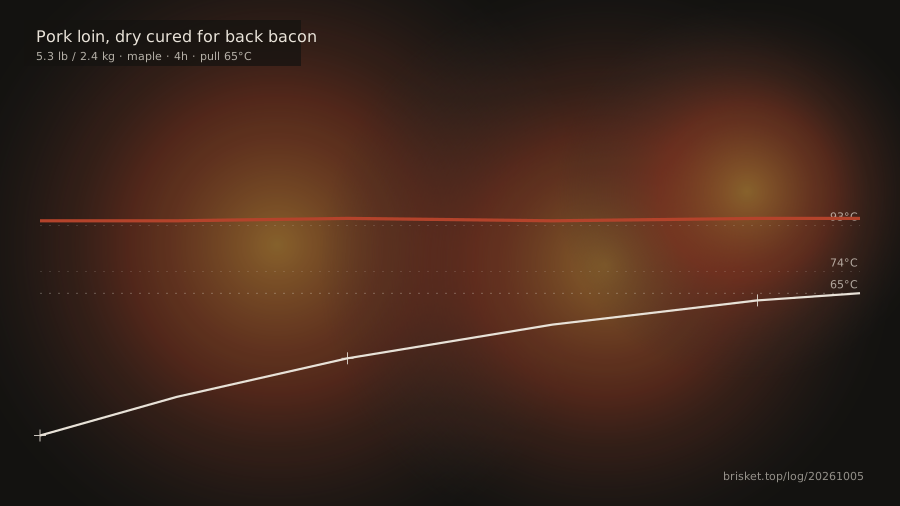
 5 Oct 2026
Pork loin, dry cured for back bacon
Maple
Insulated cabinet
5.3 lb / 2.4 kg
Even pink cure, slices at 3 mm for sandwiches4.6/5
5 Oct 2026
Pork loin, dry cured for back bacon
Maple
Insulated cabinet
5.3 lb / 2.4 kg
Even pink cure, slices at 3 mm for sandwiches4.6/5