Two spare racks, membrane on and off · 9.3 lb / 4.2 kg (2 x 2.1 kg) · Insulated cabinet
Ribs with the membrane on and off, cooked side by side
Two 2.1 kg spare racks, one peeled and one not, cooked together at 108°C over hickory for five and a half hours with no wrap. A direct test of the most repeated piece of advice in barbecue.
- Cook date11 Sep 2026
- Published15 Sep 2026
- Raw weight9.3 lb / 4.2 kg (2 x 2.1 kg)
- WoodHickory
- CookerInsulated cabinet
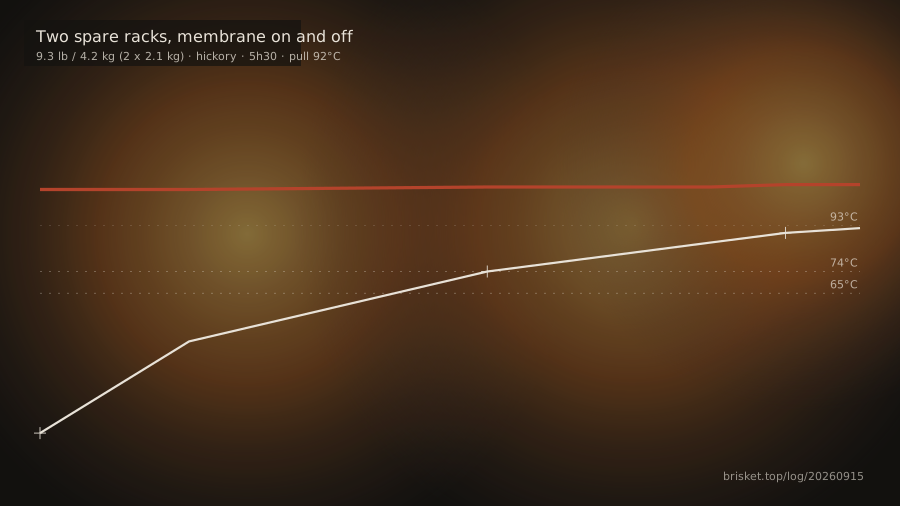
Cook timeline
- 10:00 Two racks on, left with membrane, right without, both labelled Same rub recipe, same weight of rub, applied the same way Pit108°C Internal7°C +0m
- 11:00 Nothing done Parchment membranes are already visible curling at the edges of the left rack Pit108°C Internal45°C +1h
- 13:00 First bend test Both racks bowed the same amount — the membrane makes no difference to how fast they cook Pit109°C Internal74°C +3h
- 14:30 Second bend test Right rack ready, left rack still slightly rigid Pit109°C Internal86°C +4h30
- 15:00 Left rack pulled as well Twenty minutes behind the right; the difference is inside the cooking window Pit110°C Internal90°C +5h
- 15:30 Both rested 25 minutes, then cut one bone at a time Cut after the rest, not before — cutting hot ribs loses more juice than any method choice Pit110°C Internal92°C +5h30
The test, and how it was controlled
Both racks were trimmed to as close to the same weight as possible, 2.1 kg each. The same rub was weighed out for each, 2% salt and the same spice mix, applied by hand with the same pressure. They went on the same grate, rotated together, and came off within twenty minutes of each other.
The only variable was the membrane. Everything else — pit temperature, fuel, airflow position, rest time — was the same. The results were weighed and tasted blind by four people.
| Measure | Membrane on | Membrane off |
|---|---|---|
| Raw weight | 2.10 kg | 2.10 kg |
| Cooked weight | 1.24 kg | 1.18 kg |
| Time to bend test pass | 5 h 20 m | 5 h 00 m |
| Blind preference | 2 of 4 | 2 of 4 |
What the membrane actually does
The membrane is a sheet of connective tissue on the bone side of a spare rack, about 0.3 mm thick. It is waterproof, which is the whole story: it keeps moisture in and it keeps rub and smoke out.
That cuts both ways. The membrane-on rack lost 6% less weight during the cook, which is moisture retained. It also had a saltier, less smoky exterior, because the rub sat on the membrane rather than on the meat.
- Keeps moisture in — 6% less weight lost over five hours
- Blocks rub and smoke from the bone side — the surface reads saltier and less smoky
- Does not change cook time measurably
- Does not change the texture of the meat in a blind test
So should you peel it
Yes, and for the flavour reason rather than the texture reason. Peeling takes about thirty seconds per rack with a butter knife and a paper towel for grip, and it lets the rub and the smoke reach the meat on the bone side.
If you skip it, adjust the rub downward by about 15% on the bone side, because the salt is no longer being spread over a surface that absorbs it.
| Step | Tool | Note |
|---|---|---|
| Lift the corner | Butter knife | Start at the wide end, under the membrane |
| Get a grip | Paper towel | Dry membrane tears; a towel stops it slipping |
| Pull along the bone | Hand | One sheet, along the rack, not across it |
| Deal with the skirt | Knife | The membrane continues under the skirt; peel what you can reach |
Where the real difference in ribs comes from
Having now cooked ribs every way this ledger covers, the order of importance is: chamber temperature stability, then the pull temperature, then the wrap decision, then the rub, and a long way after that, the membrane.
This cook pulled both racks at 92°C. At 88°C the meat fights the bone; at 95°C it has given up entirely. Two degrees is the difference between a rib that bites clean and one that shreds, and no membrane decision comes close to that.
- Chamber stability first: a 15°C swing ruins more ribs than anything else
- Pull at 90-92°C for a bite-through rib
- Wrap decision third: at 108°C a spare rack needs 45 minutes at most, or none
- Membrane: worth doing, not decisive
Cross-section notes
Side by side, the two racks were indistinguishable in the mouth. The membrane-on rack weighed 60 g more after cooking, because the membrane trapped moisture and blocked some rub from entering. Its exterior was noticeably saltier: the rub sat on top of the membrane instead of on the meat.
- Stall
- 0°C
- Wrap method
- No wrap (bare bark)
- Wrapped at
- never wrapped
- Pulled at
- 92°C
- Rest
- 25m
- Score
- 4.4/5
Verdict: Peeling the membrane is worth thirty seconds for one reason — the rub and the smoke reach the meat. The texture argument everyone makes is not supported by a side-by-side test. If you leave it on, expect a saltier crust and less smoke penetration.
Adjacent entries
 11 Sep 2026
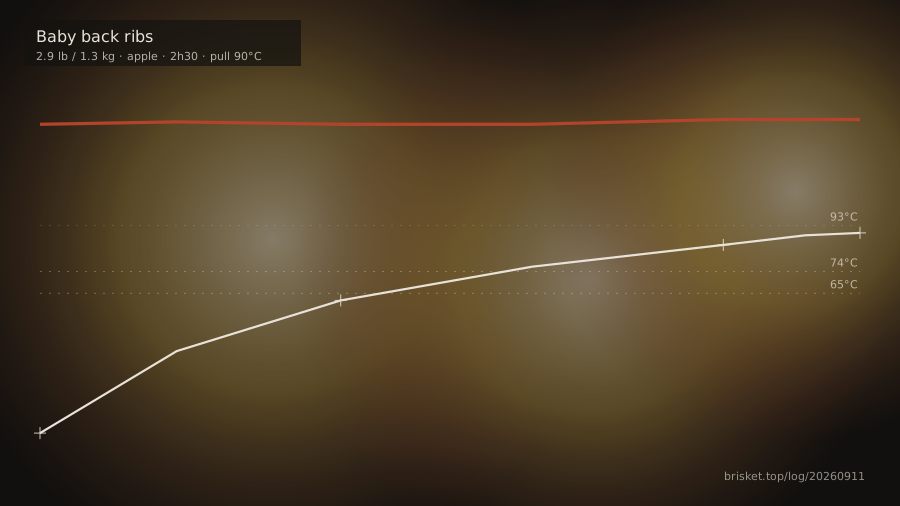
Baby back ribs
Apple
Kettle with snake
2.9 lb / 1.3 kg
Clean bite, bone bare, two and a half hours start to plate4.6/5
11 Sep 2026
Baby back ribs
Apple
Kettle with snake
2.9 lb / 1.3 kg
Clean bite, bone bare, two and a half hours start to plate4.6/5
 29 Sep 2026
Smoked meatloaf in a bacon weave
Hickory
Insulated cabinet
3.3 lb / 1.5 kg
Bacon lattice crisp on top, sides soft; sliced clean at 2 cm4.3/5
29 Sep 2026
Smoked meatloaf in a bacon weave
Hickory
Insulated cabinet
3.3 lb / 1.5 kg
Bacon lattice crisp on top, sides soft; sliced clean at 2 cm4.3/5