Duck breast, skin on · 1.5 lb / 0.7 kg (2 breasts) · Ceramic kamado
Duck breast in a smoker, and why the skin does not crisp
Two skin-on duck breasts at 150°C over cherry for sixty-five minutes, pulled at 54°C. The meat was good. The skin was not rendered, and the cross-section explains why: an air chamber cannot do what a hot pan does to duck skin.
- Cook date3 Oct 2026
- Published8 Oct 2026
- Raw weight1.5 lb / 0.7 kg (2 breasts)
- WoodCherry
- CookerCeramic kamado
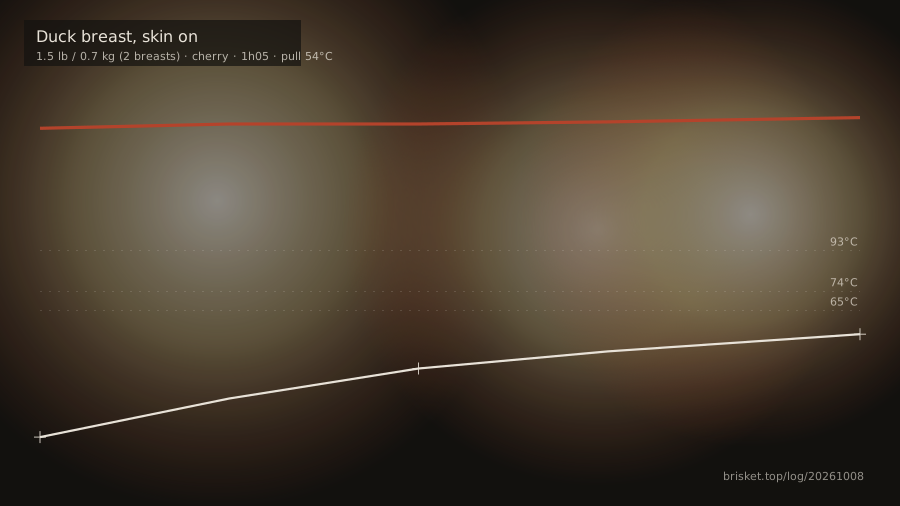
Cook timeline
- 18:00 Two breasts on, skin up, over the deflector Skin scored in 1 cm diamonds, dried 12 hours uncovered in the fridge Pit150°C Internal6°C +0m
- 18:15 Nothing done Fat is already pooling on the surface of the skin Pit152°C Internal24°C +15m
- 18:30 Drained the fat from the drip tray and kept it 40 ml of duck fat from thirty minutes — this is the useful output of the cook Pit152°C Internal38°C +30m
- 18:45 Checked the fat layer with a skewer Still 6 mm of white fat under a browned skin Pit153°C Internal46°C +45m
- 19:05 Pulled at 54°C, rested 10 minutes skin up Resting skin up lets the last of the fat drain rather than soak back in Pit155°C Internal54°C +1h05
Why duck skin needs contact heat
Duck skin is about 5 mm of fat under a thin dermis. Rendering it means getting that fat to 60°C or above for long enough that the collagen in the skin breaks down and the skin can puff. In a pan, the skin is against metal at 180°C, so the fat layer is at 100°C within three minutes and rendered by six.
In a smoker at 150°C, the skin surface is against air. Air transfers heat far more slowly than metal, so the fat layer took from 18:00 to 18:45 to reach the point where it had lost only a little, and at 19:05 it was still 5 mm thick.
| Method | Surface temperature | Time to render | Result |
|---|---|---|---|
| Cold pan to medium | 180°C metal contact | 6 min | Crisp, flat, 2 mm fat left |
| Smoker at 150°C | 150°C air | over 65 min | Brown but soft, 5 mm left |
| Smoker at 200°C | 200°C air | 40 min | Browned, patchy, uneven |
| Sear after smoking | 220°C metal | 2 min | Crisp, but the meat overshoots |
The order that actually works
Score the skin, put the breasts skin-side down in a cold pan, and bring it up to medium. The fat starts rendering before the pan is hot, which is what gives an even result and stops the skin from buckling. Six to eight minutes, pour off the fat, then flip for thirty seconds.
Then the breast goes into a 150°C smoker for twenty minutes to 54°C. Twenty minutes is long enough for the surface to take smoke and short enough that the skin does not go soft again. This is two steps, and it is the only sequence that gets both.
- Score, dry 12 hours, cold pan skin-down, medium heat
- 6-8 minutes skin down, pour off the fat, 30 seconds flesh side
- Then 20 minutes in a 150°C smoker, skin up
- Rest 10 minutes and serve immediately
The duck fat is the real yield
Two breasts gave 90 ml of rendered duck fat over this cook, and that is worth more than the meat in a kitchen. Duck fat is the best fat there is for roast potatoes, and it keeps three months in a jar in the fridge.
Strain it through a fine sieve into a jar while it is still liquid, and do not let it sit in the drip tray where it picks up the smoke residue. Smoked duck fat is a different ingredient and a much less useful one.
| Output | Amount | Use |
|---|---|---|
| Rendered duck fat | 90 ml | Roast potatoes, confit, eggs |
| Cooked breast meat | 430 g | Two servings as a main |
| Trim and skin offcuts | 80 g | Render further or discard |
Eating it, given what it is
The meat from this cook was good: 54°C, deep pink, a light cherry smoke that suits duck. Bias-cut at 45° into 8 mm slices it was excellent over lentils. It was simply let down by skin that was brown, soft and still fatty.
If you are not going to do the two-stage version, do not smoke duck breast skin-on at all. Skin it, smoke the meat, and render the skin separately into crackling — that is a perfectly good cook and it takes twenty minutes.
- Bias cut at 45°, 8 mm, against the grain
- 54°C is right; 58°C is still pink, 62°C starts to go livery
- Serve with something acidic and something earthy: lentils, cherries, or bitter greens
- Leftover duck fat keeps 3 months refrigerated
Cross-section notes
The cross-section shows the problem clearly: a 5 mm band of white, unrendered fat between the skin and the meat. In a pan the skin is in contact with hot metal and that fat renders in six minutes; in a smoker the skin faces moving air at 150°C and the fat renders much more slowly.
- Stall
- 0°C
- Wrap method
- No wrap (bare bark)
- Wrapped at
- never wrapped
- Pulled at
- 54°C
- Rest
- 10m
- Score
- 4.1/5
Verdict: A smoker is the wrong tool for duck breast skin, and the honest conclusion after this cook is to render the skin in a cold pan first and then smoke it for twenty minutes. Trying to do both at once gives you neither crisp skin nor a clean smoke ring.
Adjacent entries
 14 Sep 2026
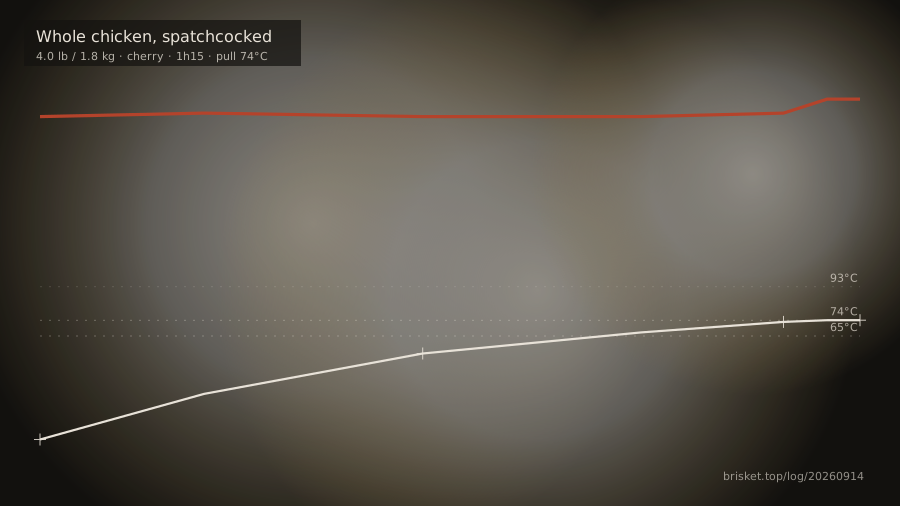
Whole chicken, spatchcocked
Cherry
Kettle with snake
4.0 lb / 1.8 kg
Skin crisp all over, breast at 74°C and legs at 82°C at the same time4.7/5
14 Sep 2026
Whole chicken, spatchcocked
Cherry
Kettle with snake
4.0 lb / 1.8 kg
Skin crisp all over, breast at 74°C and legs at 82°C at the same time4.7/5
 8 Sep 2026
Full spare ribs, untrimmed
Cherry
Bullet water smoker
5.1 lb / 2.3 kg
Fall-off-the-bone, which is the failure state for ribs3.9/5
8 Sep 2026
Full spare ribs, untrimmed
Cherry
Bullet water smoker
5.1 lb / 2.3 kg
Fall-off-the-bone, which is the failure state for ribs3.9/5